ABS or HDPE for Your Plastic Lockers? One Costs Less, the Other Lasts Longer
You’ve spent an afternoon on supplier websites and it always comes down to the same two letters: ABS and HDPE. Both claim to be the best. One is noticeably cheaper. The other promises a longer lifespan.
So which one do you actually need?
Here’s the short answer: there is no universal “better” material. There is only the right material for your environment. And honestly, most buyers don’t need HDPE. They’re just being nudged toward it by sales copy.
We’ve been exporting plastic lockers for over a decade. We’ve sold both materials, tracked the return and repair data, and we know the numbers. What follows isn’t scraped from a brochure — it’s what our after-sales team sees in the real world.
What Is ABS Plastic? (And Why It’s the Default Choice)
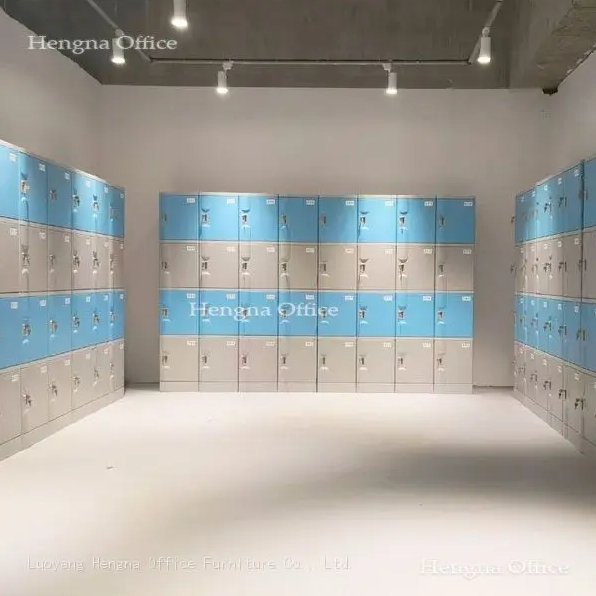
ABS stands for Acrylonitrile Butadiene Styrene — an engineering thermoplastic. In plain terms: hard, smooth, impact-resistant, and cost-effective.
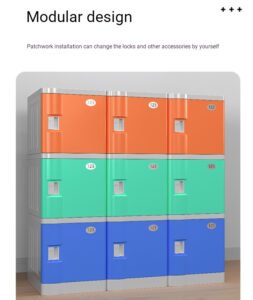
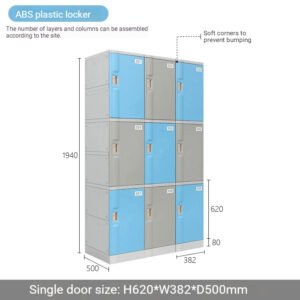
You already touch ABS every day. Car dashboards, luggage shells, monitor bezels. Anything that needs a rigid surface with a clean finish. That hardness is exactly why the locker industry adopted it. Doors close with a solid feel. Surfaces wipe clean in seconds. And the price sits in a range that makes sense for schools, gyms, and factories buying in bulk.
For indoor environments — dry, covered, climate-controlled — ABS is more than enough.
What Is HDPE? (And When It Actually Earns Its Price)
HDPE is High-Density Polyethylene. Different animal entirely. Softer, more flexible, matte finish. Pick up a public park trash can or an outdoor bench and you’re feeling HDPE.
Its strength is UV stability and extreme outdoor durability. Rain, salt spray, direct sun for fifteen years — HDPE handles it. If you’re installing lockers on an unsheltered coastal boardwalk or a desert parking lot, HDPE is the logical call.
But if your lockers live indoors, you’re paying extra for UV resistance you’ll never use.
ABS vs HDPE Plastic Lockers — Side by Side
| Feature | ABS | HDPE |
|---|---|---|
| Hardness | High, rigid feel | Medium-low, slightly flexible |
| Surface finish | Smooth and glossy, “cabinet” feel | Matte and soft, noticeable plastic texture |
| Impact resistance | Good, resists cracking | Excellent, bounces back |
| Indoor lifespan | 10–15 years | 15–20 years |
| Outdoor lifespan | 5–8 years (UV degradation) | 15–20 years (UV stable) |
| Water and rust proof | ✅ | ✅ |
| Odor resistance | ✅ Smooth surface won’t absorb | ⚠️ Slightly porous, can retain smells |
| Ease of cleaning | ✅ Wipes clean easily | ✅ Cleanable, but texture traps grime |
| Color options | Wide range, custom available | Limited standard range |
| Price | Lower | 30–50% more expensive |
| Weight | Medium | Lighter |
What Most Suppliers Won’t Spell Out
The material matters less than the location.
Scenario 1: Indoor use (schools, gyms, offices, factories)
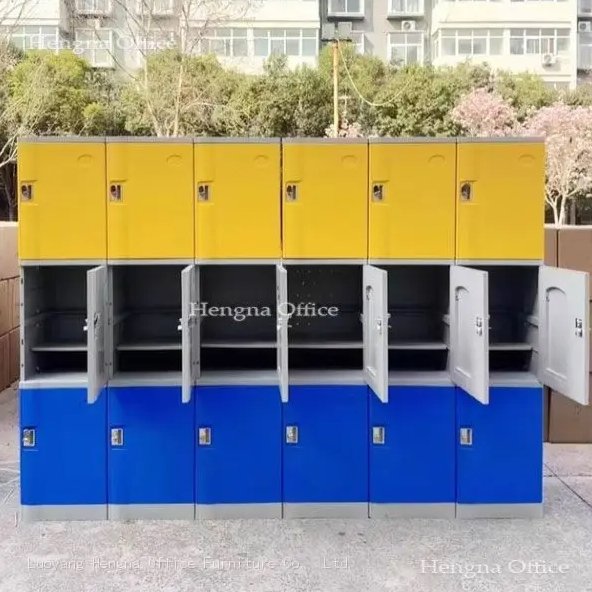
ABS handles this perfectly. A 10–15 year lifespan indoors is already overkill — most facilities renovate or relocate before that. Plus, ABS’s harder surface holds up better against gym equipment and daily scuffs than softer HDPE.
Verdict: Buy ABS. Use the savings to add more units.
Scenario 2: Semi-outdoor (covered walkways, carports, sheltered corridors)
ABS works here, but expect minor fading after 3–5 years. If the budget allows, HDPE gives you one less thing to think about.
Verdict: Budget tight? ABS. Budget comfortable? HDPE.
Scenario 3: Full outdoor exposure (open parks, unsheltered lots)
ABS is the wrong choice. UV breaks it down fast — brittle and faded within 2–3 years.
HDPE is the only sensible option here.
Verdict: HDPE, no debate.
Scenario 4: Pools and water parks (humid but covered or indoor)
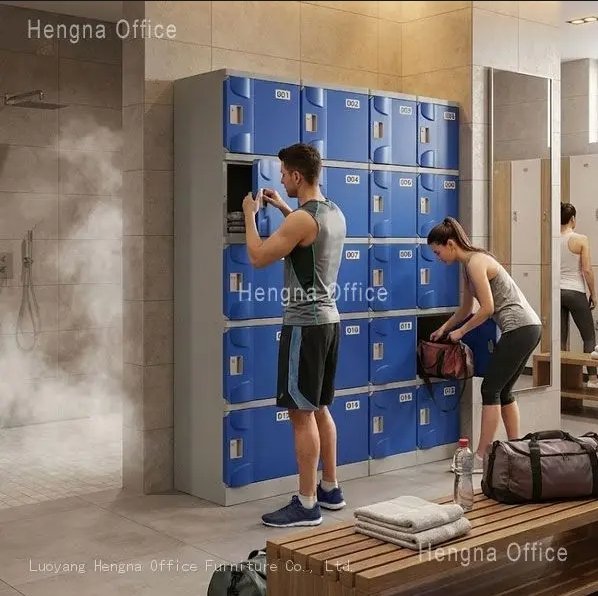
ABS delivers the best value. HDPE works too, but you’re spending extra on outdoor-grade performance that never gets tested.
Verdict: ABS.
So Which One Should You Buy?
Simple decision tree:
- Installing indoors? → ABS
- Semi-outdoor with cover? → ABS if budget is tight, HDPE if it’s not
- Full outdoor, year-round sun? → HDPE
- Need a hard, scuff-resistant surface? → ABS
- Want maximum lifespan regardless of cost? → HDPE
Bottom line: about 80% of buyers should choose ABS. Only long-term outdoor installations genuinely need HDPE.
“Cheaper” Doesn’t Mean “Lower Quality”
Seeing ABS priced below HDPE makes some buyers nervous. It shouldn’t.
ABS costs less because the manufacturing process is mature and raw material supply is stable — not because it’s inferior. Your car’s dashboard and your laptop shell are ABS. This is a legitimate engineering material, not a budget shortcut.
HDPE costs more because the resin is pricier and outdoor-grade UV stabilizers add to the formula. That doesn’t make it “better.” It makes it specialized.
Choosing the right material for your environment is smarter than choosing the more expensive one by default.
Still unsure which material fits your project? Tell us where the lockers will be installed — indoor, covered outdoor, or full exposure — and we’ll give you a straight answer. Even if that answer is HDPE.