Waterproof ABS Plastic Lockers for Gyms: The Facility Manager’s 8-Point Buying Checklist
Before You Order: The 8 Things That Separate Good Lockers From Cheap Ones
Ordering lockers for a gym or aquatic center without checking these eight items is how you end up replacing them in three years. Go through this list before you request a single quotation. We’ve seen too many facilities buy based on the lowest bid and regret it by year two.
1. Material: Is It Solid ABS or a Blend?
Not all “plastic lockers” use the same plastic. Some budget options use PVC — brittle, fades fast, releases VOCs — or polypropylene with weaker impact resistance. Pure ABS or HDPE is what you want for a wet, high-traffic environment. Ask the supplier for the material datasheet. If they won’t provide one, that tells you enough. A legitimate manufacturer has test reports from their resin supplier showing composition, impact strength, and UV resistance. A reseller who’s never seen the factory floor doesn’t have any of this.
2. Door Construction: Solid or Hollow?
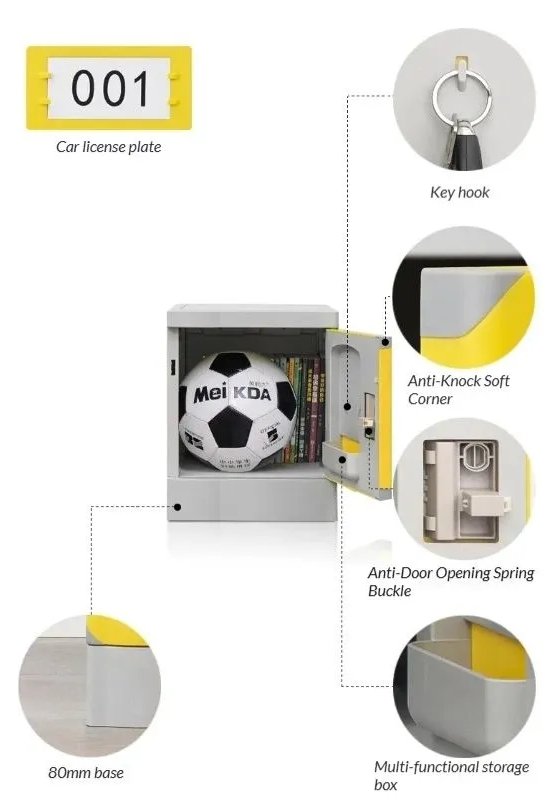
Knock on a sample door. A solid thud means the panel is thick enough to survive daily abuse. A hollow plastic “clack” means thin-wall construction — the kind that cracks when someone kicks it shut with their foot. Gym locker doors need at least 20mm thickness at the edges, with internal ribbing for stiffness. Request a cross-section photo of the door panel. A quality manufacturer will show you one. A low-end supplier will dodge the question.
3. Hardware: Check the Hinges and Latch Plates
The door panels are waterproof. Are the hinges? Many “waterproof” plastic lockers ship with zinc-plated steel hinges that rust within a year. Confirm: 304 stainless steel hinges, latch plates, and screws. Not coated steel. Not zinc-plated. Solid stainless. Same for the lock mechanism — internal components should be brass or stainless. A steel lock in a pool environment will seize. We’ve seen gyms replace every hinge on a 50-unit installation because someone in procurement saved a few dollars on hardware spec. The labor cost of that replacement was more than the savings.
4. Ventilation: Molded, Not Drilled
Locker doors need ventilation to prevent odor buildup. The vent pattern should be molded into the door during production, not drilled as a secondary step. Drilled holes have raw edges that trap moisture and create weak points. Molded vents have smooth, sealed edges throughout — water runs off, doesn’t collect. Hold a sample door up to the light and look through the vents. If the edges of the vent slots look rough or have plastic burrs, that’s a drilled door — pass.
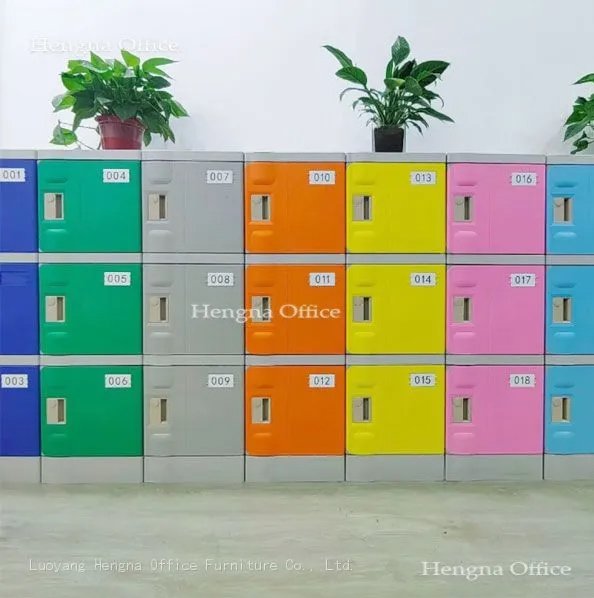
5. Color: In the Plastic or On the Surface?
ABS lockers get their color during injection molding — pigment is mixed into the plastic resin before it enters the mold. The color goes all the way through. Scratch it, same color underneath. Clean it with disinfectant a thousand times, no change. Some “plastic” lockers are actually metal lockers with a plastic laminate. Scratch through and you hit metal that rusts. Confirm: in-mold coloring, not surface coating. Take a key and scratch a sample door (ask first). If the scratch shows a different color underneath, it’s a laminate — don’t buy it for a wet environment.
6. Lock Type: Match It to How People Use the Space
- Public pools (day use). Coin-return locks or RFID wristbands. Users come and go within hours. Key management at scale is a logistics problem.
- Gym memberships. Built-in combination locks or member-supplied padlocks. Members remember their own code or bring their own lock — zero staff involvement.
- Staff areas. Keyed-alike cam locks with a master key held by facility management. Lost key gets replaced without rekeying the whole column.
- Premium facilities. RFID card or smartphone app locks. The same card that checks the member in opens their assigned locker.
7. Layout: Tier Count by Use Case
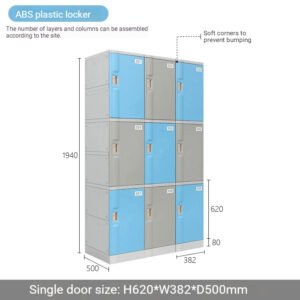
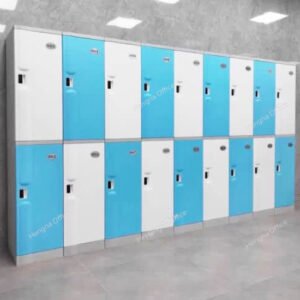
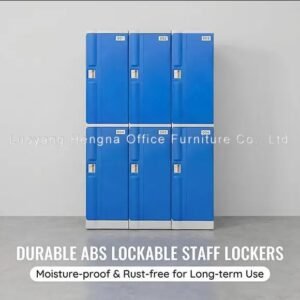
1-tier: staff lockers, full-length garment storage. 2-tier: gym members, changing rooms — approximately 930mm tall per compartment. 3-tier: day-use, compact storage at roughly 620mm per compartment. 4-tier: poolside valuables only, about 465mm each. 6-tier: phone, wallet, keys — quick access at about 310mm per compartment. Match the tier to the use, not the other way around. A common mistake: buying all 2-tier lockers because “that’s what gyms have” when half your users just need a 4-tier for a towel and phone.
8. Supplier: Factory or Middleman?
Buying from a trading company adds margin without adding value. You get the same product with a markup and no manufacturing accountability. Factory-direct means the team that designed the mold answers your technical questions. Custom colors, custom locks, and custom packaging come from the people who actually do the work. Ask directly: “Are you the manufacturer?” If the answer involves “our partner factory,” you’re talking to a middleman. One more test: ask about the mold maintenance schedule. A factory knows exactly when their molds were last serviced. A middleman has never seen the mold.
Common Ordering Mistake: Same Tier for Every Zone
We see this often: a gym orders 50 columns of 2-tier lockers because “that is what changing rooms have.” Then they realize half the lockers sit unused because members near the pool entrance want a small locker for a phone and towel, not a full-height compartment for a change of clothes. And the staff changing area has people hanging uniforms in a locker meant for gym bags. The fix is simple: split the order. 2-tier for the main changing room where members shower and change. 4-tier near the pool deck for valuables and towels. 1-tier in the staff area for uniforms and personal items. The total column count stays the same. The per-column cost adjusts slightly by tier. What you gain: every locker gets used for its intended purpose, and you don’t have staff complaining about cramped lockers while pool-deck units sit half empty. Draw a quick floor plan sketch before ordering — mark where people enter, where they change, and where they exit. The locker layout follows the traffic flow, not the other way around.
FAQ
Q: Can ABS lockers be used outdoors?
A: Under a canopy or covered walkway — yes, with UV-stabilized material. Fully exposed to rain and sun — not recommended without additional weather protection.
Q: Fire rating?
A: ABS has an HB flame rating (UL 94 standard). For facilities needing higher ratings, flame-retardant ABS formulations are available as a custom order.
Q: Can I get samples first?
A: We ship door panel samples and color swatches. Cover the courier cost, we send them within 3 working days. Full column samples available for projects over 50 units.