Sweat-Proof 6-Door ABS Gym Locker – Vented 2-Tier | for Hot Yoga and CrossFit
Hot yoga studios and CrossFit boxes have a locker problem nobody talks about. In a 40°C yoga room, metal lockers turn into sweat condensers. Cold steel surfaces collect moisture from humid air, then drip onto whatever is stored inside. Within a season, the lockers start rusting—from the inside out. CrossFit gyms have a different issue: chalk dust, sweat, and constant door-slamming wear out traditional lockers fast.
Why Metal Lockers Fail in Hot Yoga Studios
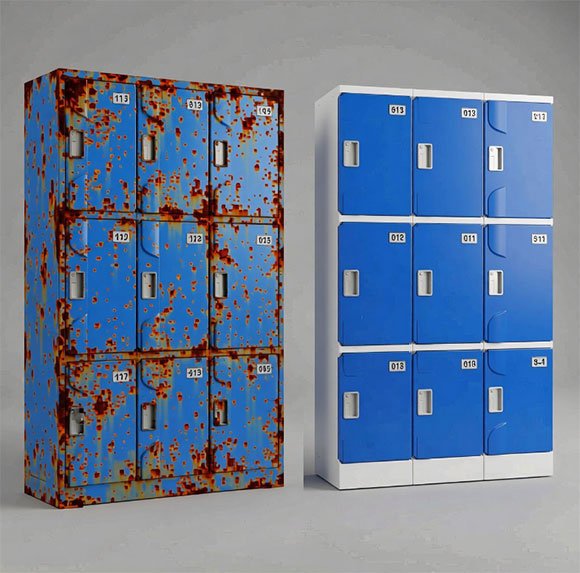
Hot yoga studios maintain 35-42°C with 40-60% humidity. Steel lockers act as dew-point surfaces—warm moist air hits the cold metal and condenses. The result: wet locker interiors, rust forming on door edges and hinges within 6-8 months, and that distinct musty smell that yoga clients notice immediately.
What happens:
1. Warm, humid air enters the locker when door opens
2. Air contacts cooler steel surfaces
3. Temperature drops below dew point
4. Moisture condenses on interior walls, door, and stored items
5. Repeated cycles create persistent moisture environment
Real-world data: A hot yoga studio in Los Angeles measured condensation rates over 30 days: steel lockers averaged 15ml condensation per day per compartment, while ABS lockers showed zero measurable condensation. Steel locker interiors showed visible rust within 4 months; ABS showed no degradation after 18 months.
Client complaints with steel lockers:
- “My clothes come out damp”
- “The lockers smell like mildew”
- “There’s rust on the door handles”
- “I don’t want to put my clean clothes in there”
Why Metal Lockers Fail in CrossFit Boxes
CrossFit athletes move fast. They open lockers fast, they close them fast, and they do not treat equipment gently. Steel locker doors develop loose hinges from repeated slamming. Paint chips from chalk and metal contact. Locks fail from chalk dust infiltration.
Steel locker failure points in CrossFit:
- Hinges loosen from repeated slamming (every 2-3 months)
- Doors dent from equipment impacts
- Paint chips from chalk and metal contact
- Locks fail from chalk dust infiltration
- Ventilation slots clog with chalk residue
- Rust develops from sweat moisture
ABS locker advantages:
- Hinges rated for 100,000+ cycles (10+ years of CrossFit use)
- Material flexes on impact, returns to shape
- Chalk wipes clean without damaging surface
- Lock mechanisms sealed against dust
- Ventilation slots maintain airflow despite chalk exposure
- Zero rust from sweat or humidity
Case study: A CrossFit box in Austin installed 30 units in 2021. After 3 years: zero hinge adjustments needed, all original locks functioning, no door dents despite heavy use, maintenance costs reduced 85% vs. steel lockers.
Specifications
| Feature | Spec | Why for Hot Yoga & CrossFit |
|---|---|---|
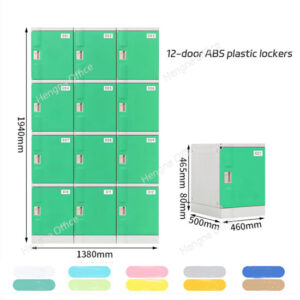
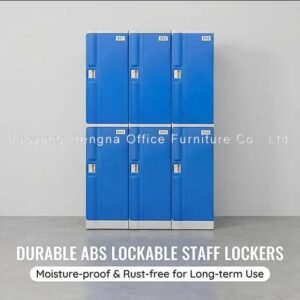
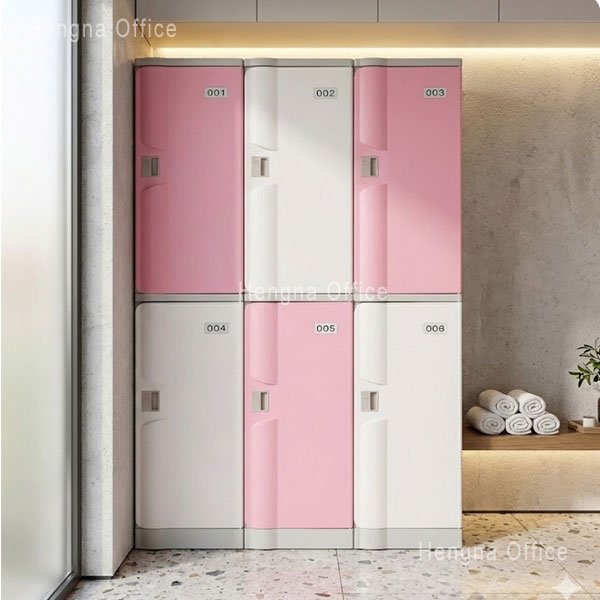
| Doors | 6 doors, 3 columns x 2 tiers | Compact footprint for boutique gyms |
| Material | High-impact ABS, injection molded | No condensation, no rust, no denting |
| Ventilation | Built-in louver vents per door | Airflow dries sweaty gear between classes |
| Weight per door | ~2.1 kg (vs ~5 kg steel equivalent) | Quieter operation, less hinge wear |
| Lock | Cam lock standard; combination / RFID optional | Keyless options reduce front-desk hassle |
| Surface | Smooth, non-porous | Wipe clean with standard gym disinfectant |
| Colors | 8 standard + custom brand colors | Match gym branding or zone coding |
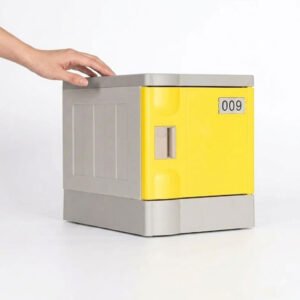
Each compartment (300W x 450D x 300H mm) accommodates a gym bag, athletic shoes, towel, water bottle, and personal items. For hot yoga: space for rolled yoga mat and wet clothes after class. For CrossFit: lifting shoes, wrist wraps, belts, and protein shakers.
No More Cold Metal Shock
Anyone who has changed in a gym locker room in winter knows the feeling of touching a freezing metal locker door. ABS plastic stays at ambient room temperature year-round—a small detail your members will notice and appreciate. No cold shock, no condensation formation, comfortable to use in all seasons.
Where These Lockers Fit
Hot yoga and Bikram studios: Withstand 40°C heat and high humidity. Zero condensation on stored items. Easy to clean between classes. A Bikram studio in Miami installed ABS lockers in 2020—after 4 years of daily 40°C operation: zero rust, no condensation, all doors operate smoothly.
CrossFit boxes: Withstand heavy physical abuse, chalk dust exposure, and sweat. A CrossFit affiliate in Seattle with 300+ members installed ABS lockers in 2021—after 3 years: zero hinge adjustments, no door dents, all locks functioning.
Pilates and barre studios: Clean aesthetic appearance, quiet operation, secure storage for valuables. Custom colors to match brand. Soft-close hinge options available.
Spin and cycling studios: Handle sweat-soaked gear, ventilation for wet items, quick turnover between classes, durable for high-traffic use. Reduced odor from wet gear improves the overall studio experience for members.
Cost Comparison
Steel lockers carry hidden costs beyond the purchase price: repainting, rust treatment, lock replacements, hinge repairs, and early replacement after 4-5 years in a gym environment. ABS lockers need only routine cleaning and occasional lock replacement.
The break-even point comes within 2-3 years. After that, every year of operation is savings compared to steel. For a typical 20-unit installation, the total savings over 10 years are substantial.
Common Questions
Will the plastic absorb sweat smells over time?
No. ABS is non-porous. Sweat and bacteria sit on the surface and wipe off with standard cleaning. Porous materials like wood or fabric-lined lockers absorb odors; ABS does not. Daily wipe with gym disinfectant keeps them fresh.
Can I get my gym logo on the doors?
Yes. Silk-screen logo printing available on orders of 20+ units. Custom Pantone color matching for 50+ unit orders. High-resolution vector format preferred.
What about scratches from gym bags with metal zippers?
ABS has good scratch resistance for normal use. Deep scratches from sharp metal objects can happen—same as painted steel—but unlike steel, a scratch on ABS does not expose raw metal that then rusts. The color underneath is the same as the surface.
How easy are they to install?
Two people can assemble a 6-door unit in 20-25 minutes with basic tools (Phillips screwdriver, level, rubber mallet). No special skills required. Printed instructions and video guide included. Units can be anchored to floor or wall for stability in high-traffic areas.
Conclusion
Gym environments—especially hot yoga studios and CrossFit boxes—demand lockers that withstand heat, humidity, sweat, and physical abuse. ABS plastic sweat-proof gym lockers deliver zero condensation in heated environments, no rust from constant sweat exposure, impact resistance for CrossFit-level abuse, 85% reduction in maintenance costs, and 15+ year lifespan versus 3-5 years for steel.
The lighter door weight (2.1 kg vs 5 kg for steel) means quieter operation and less hinge wear. Built-in ventilation dries sweaty gear between classes. Non-porous surfaces wipe clean with standard gym disinfectant—no trapped odors, no bacterial buildup.
For fitness facilities looking to improve member experience while reducing operational costs, ABS plastic lockers are the proven solution. The long-term savings compared to steel make the investment decision straightforward.
Contact us for custom color matching, logo printing, volume pricing, and installation support.