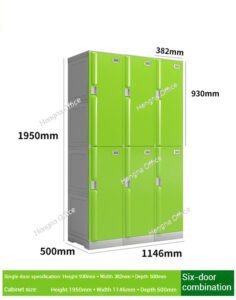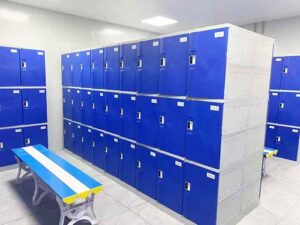
How Waterproof ABS Lockers Solve Poolside Rust: A Facility Manager’s Account
The Locker Room That Smelled Like Rust
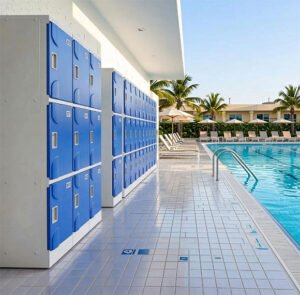
This was a public aquatic center in Southeast Asia, 2023. The facility had been open four years. The pool was clean, the water quality was good. The locker room was falling apart.
Steel lockers installed during construction were rusting from the bottom up. Door hinges had seized on roughly a third of the units. The smell — a mix of chlorine, mildew, and rust — hit you before you saw the lockers. Members complained. Staff spent hours every week sanding rust spots and repainting doors. The facility manager’s quote: “We replace about 15 doors a year. It never stops.”
Six months after switching to ABS lockers, the same facility manager sent a one-line email: “We haven’t touched a locker since installation.” The maintenance staff that used to spend part of every Friday on locker repair now spends that time on pool equipment and facility upgrades — things that actually improve the member experience instead of just stopping it from getting worse.
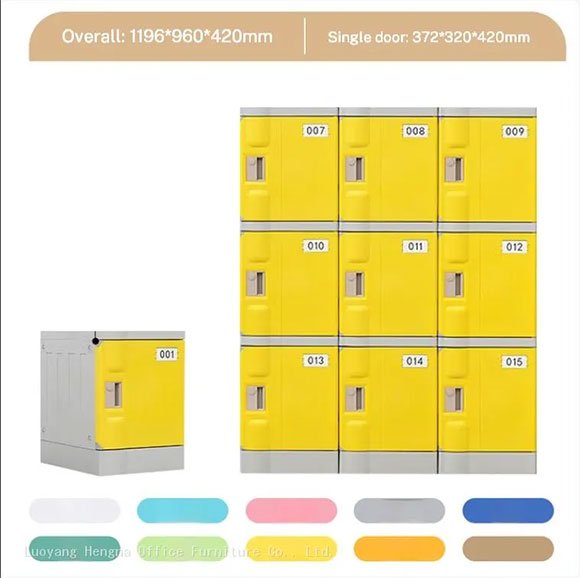
What Chlorine Does to Metal — It’s a Catalyst, Not Just a Chemical
Chlorine isn’t just corrosive. It’s a catalyst. When chlorine compounds land on a metal surface — from pool water splashes, wet swimsuits, or vapor in the air — they accelerate oxidation in a way plain water doesn’t.
Here’s the chemistry in plain terms: chlorine ions penetrate the passive oxide layer that protects steel. Once that oxide layer is compromised, the underlying steel rusts at an accelerated rate. The chlorine isn’t consumed in this reaction — it acts as a catalyst, meaning the same chlorine ion can keep triggering rust over and over. This is why “stainless steel” lockers fail next to pools. The grade used in commercial lockers — typically 201 or 304 — has limited chloride resistance. You need 316 marine-grade stainless to truly resist chlorine, and that’s 3–4 times the cost. Almost no one uses it for lockers.
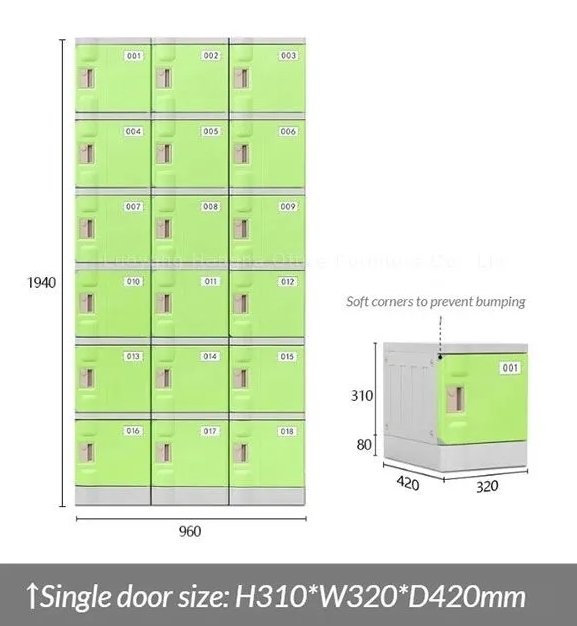
One-Piece Molding: No Seams, No Water Entry Points
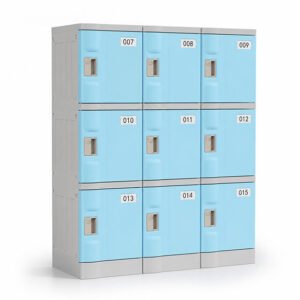
Each ABS door panel is one piece of injection-molded plastic. No welds. No folded edges. No joints. Steel lockers have seams at every fold and weld point. These seams get painted over during manufacturing, but paint on a seam flexes differently than paint on a flat surface. With daily temperature cycling — pool rooms go from 25°C to 35°C and back — the paint at the seam develops hairline cracks. Moisture enters. Rust starts from inside the seam, where you can’t see it until the paint bubbles up.
An ABS door has no seams. Water has nowhere to get inside because there’s no boundary between one piece of material and another. A facility manager at a public pool told us: “With the old steel lockers, I could predict which doors would fail first — the ones near the shower entrance, always at the bottom seam. With the ABS units, there’s no pattern. They all just… work.”
Drainage: Built Into the Design
Pool locker rooms get wet. Towels drip. Swimsuits drip. People walk from the shower to the locker in wet feet. Water ends up on the floor and inside lockers. Our ABS lockers include sloped internal floors — water that drips off a wet swimsuit runs toward the front of the compartment and out, rather than pooling in the back corner. The base of each column sits on raised feet, leaving a gap for floor-level water to flow underneath without touching the locker material.
What the Numbers Show After Switching
One public pool chain reported after switching 200 lockers from steel to ABS:
- Annual locker maintenance labor: down roughly 65%
- Door replacement rate: from 12–15 per year to zero in the first year
- Repainting budget: eliminated
- Member complaints about locker condition: down to zero within the first quarter
The facility manager’s summary: “We used to budget for lockers like we budget for pool chemicals — a recurring expense. Now it’s a capital item. We buy them once.”
What About Wood and Laminate Lockers? A Quick Comparison
Some aquatic centers consider wood-look or laminate lockers for aesthetic reasons. Here is what happens next to a pool: laminate edges absorb moisture and swell within 6–12 months, creating gaps where the laminate separates from the substrate. Wood-effect vinyl wraps peel at corners where wet hands grip the door edge daily. Solid wood or plywood absorbs chlorine vapor and releases it slowly, creating that pool-chemical smell inside the compartment even when it’s empty — which means every towel and swimsuit stored inside comes out smelling faintly of chlorine. ABS has no aesthetic penalty. It comes in colors that work in premium facilities. It just doesn’t pretend to be wood, and in a wet environment, that honesty pays off. A resort spa we worked with originally specified teak-look laminate lockers for their pool changing room. Within 14 months, the laminate was peeling on every door near the shower entrance. They switched to matte-textured grey ABS — not wood-look, just a clean, modern material that stays clean. The general manager’s comment: “It doesn’t try to be something it’s not, and it doesn’t fall apart.”
FAQ
Q: How do they handle saltwater pools?
A: Saltwater pools use a chlorine generator — the chlorine concentration is similar to traditional pools. Same ABS material. Same performance. Salt residue wipes off with fresh water.
Q: Can lockers be hosed down during deep cleaning?
A: Yes. Facilities with floor drains can spray-clean entire locker banks. ABS doors are waterproof throughout — no exposed particle board, no metal to rust.
Q: Do you have a smaller poolside day-use model?
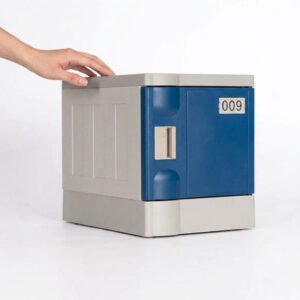
A: Yes. 4-tier and 6-tier compact lockers for phone, wallet, and key storage near the pool deck. Same ABS material, smaller footprint.
Q: How soon can we expect delivery after ordering?
A: Standard color units ship within 7–10 working days. Custom colors add roughly one week. For aquatic centers on a tight renovation schedule — typically the annual maintenance shutdown window — we can hold stock against a confirmed PO and release on your specified date. Let us know your shutdown calendar during quoting and we build backward from it.
The simple version: Pool chlorine destroys metal lockers. It is a question of when, not if. ABS lockers do not react with chlorine, do not absorb water, and have no seams for moisture to enter. Facilities that switch stop budgeting for locker repair and start spending that money on things that improve the member experience. If you manage a pool or aquatic center and your locker room currently smells like rust, you already know what material your next lockers should not be made of.