Wet-Area Locker Stress Factors: What Damages Lockers Around Pools, Spas, and Water Parks
Not all wet environments are the same. A locker that survives five years in a dry fitness center corridor may fail in eighteen months on a pool deck ??and the difference is rarely obvious during procurement. Understanding the specific environmental stress factors that attack lockers in wet areas changes what you look for in a specification sheet. This guide catalogs the four primary stress factors in wet-area locker environments and explains which material properties matter for each one.
Facility managers who skip the stress-factor analysis typically default to “get the same lockers and paint them more often.” The alternative ??matching the material to the actual environment ??produces a different set of requirements that standard painted steel often cannot meet on paper, before the first unit is even installed.
Stress Factor 1: Chemical Vapor Concentration
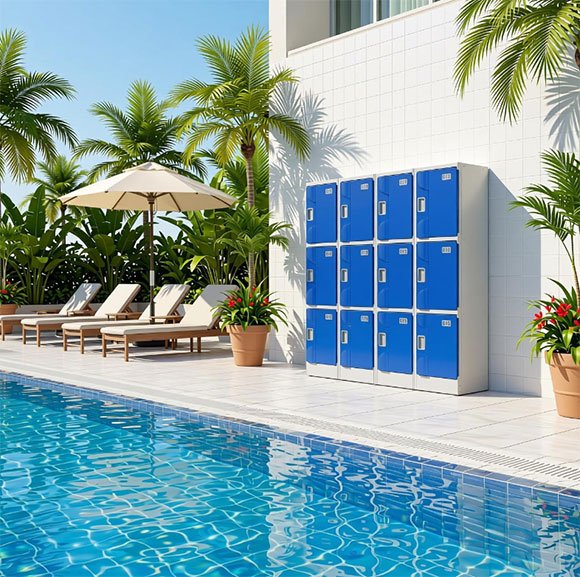
Indoor pools, water parks, and spa wet areas share a chemical signature: chloramine vapor. This forms when chlorine reacts with organic compounds introduced by swimmers ??sweat, skin cells, cosmetic residues. The vapor is heavier than air and settles at roughly 1 to 2 meters above floor level, which is exactly the height of locker door faces and lock mechanisms.
Chloramine vapor is mildly acidic. On painted steel, it attacks the paint at a chemical level ??not by dissolving it, but by breaking down the polymer binder that holds pigment particles together. The visible result is chalking: a fine white powder that rubs off on contact. Chalking is the first stage of paint system failure. Once the binder degrades, moisture reaches the steel substrate through the now-porous coating.
Stress Factor 2: Internal Humidity Cycling
A closed locker containing a damp towel creates a micro-environment that is wetter than the room it sits in. Users place wet items inside, close the door, and walk away. The internal relative humidity spikes to near 100 percent and stays there for hours ??often until the next user opens the door. In poorly ventilated lockers, this cycle repeats daily with minimal drying between uses.
This is the mechanism that causes rust on the inside of steel locker doors while the outside still looks acceptable. The exterior benefits from whatever air circulation exists in the room. The interior is trapped. Paint on interior surfaces receives the same chemical exposure as exterior surfaces plus persistent moisture ??a double load that the coating was not designed to handle.
Stress Factor 3: UV and Thermal Expansion
Outdoor and semi-outdoor locker installations ??pool decks, water park changing pavilions, beach club storage ??add solar radiation to the stress mix. Sunlight heats locker surfaces unevenly: the sun-facing side may reach 60?C while the shaded side stays at ambient temperature. This temperature differential drives thermal expansion.
Steel and paint expand at different rates. Over hundreds of daily thermal cycles, the bond between paint and steel gradually weakens. The first visible sign is micro-cracking along edges and corners where the coating is thinnest. Once a crack forms, moisture enters and the corrosion cycle begins ??even on a locker that has never been scratched or impacted.
Stress Factor 4: Mechanical Wear + Moisture Combination
A coating that stays intact protects steel indefinitely. The problem is that locker doors are not static objects ??they open and close thousands of times per year. Door edges rub against frames. Lock mechanisms create friction points. Users kick doors shut, lean on them, hang bags from handles. Each mechanical interaction creates wear on the coating at predictable points.
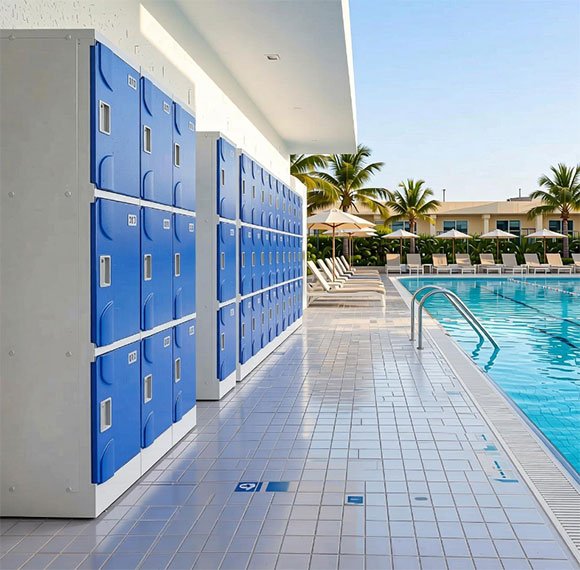
The bottom 150 millimeters of a locker door is the highest-wear zone: kicked by shoes, splashed by mop water during floor cleaning, and the first area to show coating failure. Once the coating is breached at the bottom edge, water wicks upward through capillary action along the steel surface beneath the paint ??creating rust that spreads upward from the breach point, hidden beneath still-intact paint above.
Material Response Comparison: How Each Locker Type Handles the Four Stress Factors
- Standard powder-coated steel: Vulnerable to all four factors. Each factor attacks the coating; once the coating is compromised at any point, the steel substrate is exposed. Life expectancy in wet areas: 2 to 4 years before coating failure is visible.
- Marine-grade coated steel: Better resistance to chemical vapor (epoxy primers resist chloramine better than polyester powders). Still vulnerable to mechanical wear and thermal cycling. Life expectancy: 3 to 5 years ??the coating lasts longer but fails through the same mechanisms.
- Stainless steel: Resists factors 1 and 2 (chemical and humidity). Vulnerable to factor 3 in a different way: stainless can develop tea-staining (surface discoloration from salt or mineral deposits) in coastal or hard-water environments. Most expensive option by material cost.
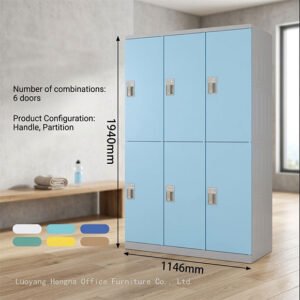
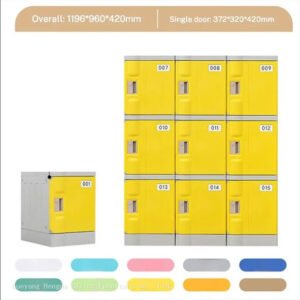
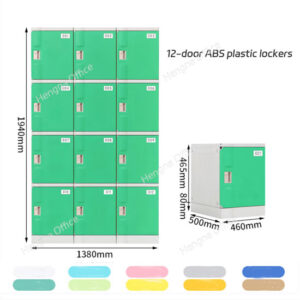
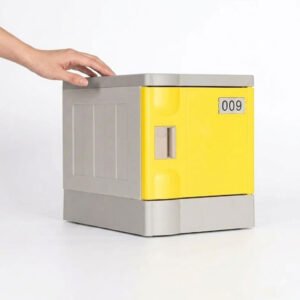
- Solid ABS plastic: Inert to chemical vapor. Non-porous ??does not trap moisture. Through-body color eliminates coating failure from thermal cycling or mechanical wear. UV-stabilized grades resist solar degradation. Vulnerable to: deep impact that exceeds material flex threshold (rare in normal use).
Specification Checklist for Wet-Area Locker Procurement
- Does the material require a coating for corrosion protection? If yes, what is the coating warranty period in wet-area conditions?
- Is ventilation integrated into the locker body design, or does it depend on room-level air handling?
- For outdoor or semi-outdoor installations: is UV stabilization specified and documented?
- Does the locker include a raised base or floor-clearance design to isolate the body from standing water during cleaning?
- What is the hardware material? Hinges, lock plates, and handles should be stainless steel or equivalent corrosion-resistant material regardless of the locker body material.
Frequently Asked Questions
Q: If the building has good HVAC, do I still need to worry about locker ventilation?
Building HVAC manages room-level air quality. It does not address the micro-environment inside a closed locker containing wet items. A room at 50 percent relative humidity with good air exchange still has lockers that spike to 90-plus percent internally when wet towels are stored inside. Locker-level ventilation is the only mechanism that addresses internal humidity directly.
Q: Can I just specify a thicker coating on steel lockers for wet areas?
A thicker coating delays failure but does not change the failure mechanism. The problem is not coating thickness ??it is that any coating on any metal substrate is a barrier system, and barrier systems have failure points at edges, fasteners, and wear zones. If the environment attacks the barrier continuously, the question is when the barrier fails, not whether. Material-based (rather than coating-based) protection eliminates the barrier failure question entirely.