How Much Do Schools Spend on Locker Maintenance? The Hidden Cost Most Budgets Miss
School lockers are one of those budget items that everyone knows costs money ??but almost no one tracks properly. The purchase price goes into the capital budget. What happens after that ??the repairs, the repainting, the replacements, the staff hours ??gets buried in the maintenance budget, spread across dozens of work orders that never appear on the same spreadsheet. By the time a school district realizes what steel lockers are actually costing them, they have already spent enough on maintenance to have bought the lockers twice.
The Line Item Nobody Tracks
A typical K-12 school with 600 students has roughly 600 to 800 locker doors spread across corridors and changing rooms. The lockers were installed when the school was built ??maybe 8 years ago, maybe 20. They are steel. They were painted once at the factory. Since then, the maintenance department has been fighting a slow-motion battle against rust, dents, stuck doors, broken latches, and graffiti.
Here is what makes the cost invisible: each repair is small. A can of spray paint here, a replacement hinge there, two hours of a maintenance worker’s afternoon. No single work order triggers a budget review. But add them up over five years and the numbers get uncomfortable fast.
Where the Money Goes: School Locker Maintenance by Activity
| Maintenance Activity | Frequency | Impact Over Time |
|---|---|---|
| Rust spot treatment and touch-up paint | Quarterly | Becomes more frequent each year as coating degrades |
| Door straightening (bent hinges, kicked doors) | Monthly | Affects 5 to 10 percent of doors annually |
| Lock and latch replacement | As needed (~40/year for 600 doors) | Steady replacement rate, plus labor per unit |
| Graffiti removal and repainting | Monthly | Requires sanding, priming, painting ??multi-step process |
| Full repaint cycle | Every 5 to 6 years | Entire locker bank offline during summer break |
| Staff labor hours | ~3 hours/week for 600 doors | Hours lost to HVAC, plumbing, classroom upgrades |
For a 600-door school, these activities add up to a maintenance bill that rivals the original locker purchase price within 5 to 6 years. Over a 10-year period, the cumulative maintenance cost typically exceeds the initial purchase cost by a factor of two or more.
Steel Lockers: The Predictable 5-Year Maintenance Cycle
Steel lockers in schools follow a cycle that repeats with clockwork regularity:
- Year 1-2: Lockers look fine. Minor scratches from normal use. Maintenance budget for lockers is near zero.
- Year 3-4: First rust spots appear around lock plates and bottom corners. Maintenance starts spot-treating with rust converter and touch-up paint. The color never quite matches.
- Year 5-6: Full repaint cycle. Lockers are taken offline during summer break, sanded, primed, and repainted. Paint fumes mean extra ventilation time before students return.
- Year 7-10: Repairs accelerate. Hinges loosen. Doors warp and no longer close. Replacement doors are ordered ??the new paint does not match the older paint on adjacent lockers.
- Year 12-15: Full replacement considered. Capital budget request submitted. If denied, maintenance patches them for 3 more years while rust spreads into body frames.
ABS Lockers: Breaking the Maintenance Cycle at Step One
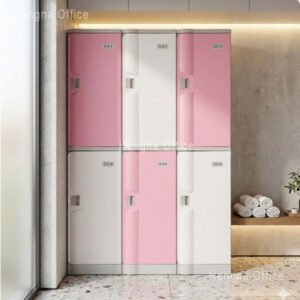
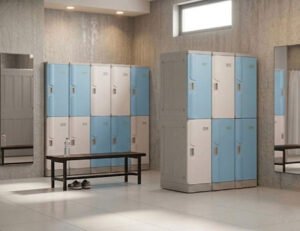
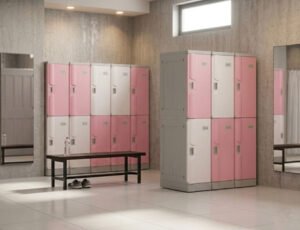
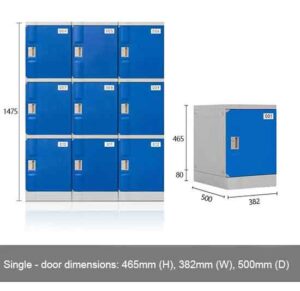
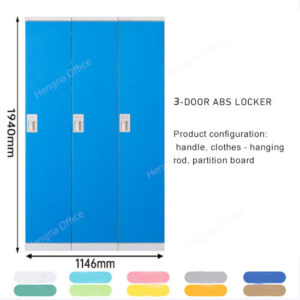
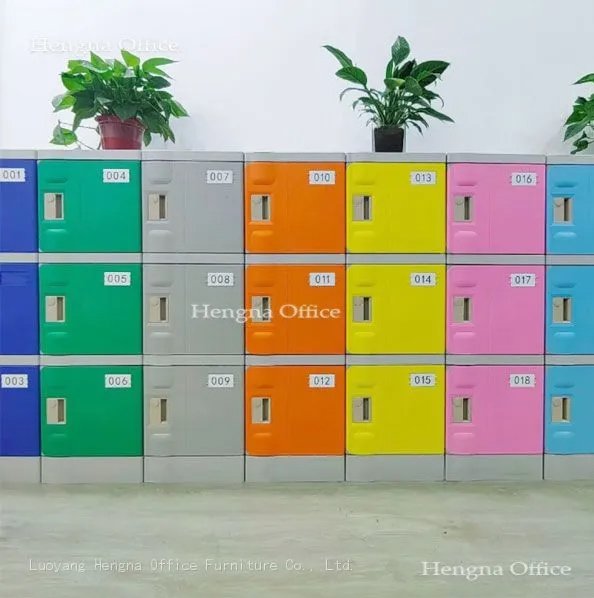
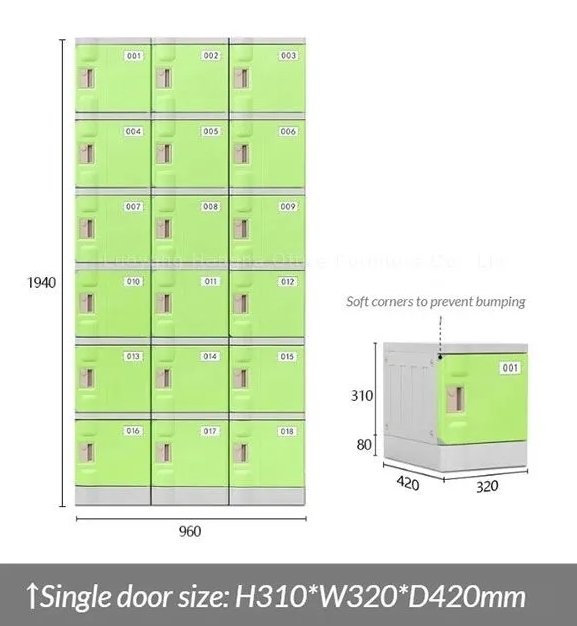
ABS plastic lockers break this cycle at the source. There is no paint to scratch, no metal to rust, and no coating to repaint. The material is colored all the way through ??a scratch reveals the same color underneath. Dents are rare because ABS flexes and rebounds where steel permanently deforms. Graffiti wipes off with standard cleaning products rather than requiring sanding and repainting.
The annual maintenance for 600 ABS locker doors in a school: mostly general cleaning. No rust treatment, no repaint cycle, no door replacement due to corrosion. The lock mechanisms are the only wear item, and they are the same padlock hasps or cam locks used on steel lockers ??so that cost is identical between the two materials.
Steel vs ABS: Maintenance Workload Over 10 Years
| Activity (600 Doors, 10 Years) | Steel Lockers | ABS Lockers |
|---|---|---|
| Rust treatment events | 30 to 40 (quarterly after year 2) | Zero |
| Full repaint cycles | 2 (years 5 and 10) | Zero |
| Doors replaced (corrosion) | 50 to 80 over 10 years | Zero |
| Staff hours (locker-specific) | ~1,500 hours | ~200 hours (cleaning only) |
| Summer break availability for other projects | Lost ??repainting consumes the window | Available ??HVAC, plumbing, classroom upgrades |
The ABS option reduces locker-specific maintenance labor by roughly 85 percent. For an understaffed school maintenance team, that is the difference between spending every summer painting lockers and spending summers on projects that actually improve the learning environment.
What Schools Actually Experience After Switching to ABS
A school district in a coastal Southeast Asian region began replacing their rusted steel corridor lockers with ABS units in 2023. The motivation was practical: summer break was being consumed by locker repainting every year, leaving no time for HVAC maintenance or classroom technology upgrades. The maintenance director estimated that repainting consumed roughly half of every summer break for a crew of three – time that could have been spent on projects with a direct impact on the learning environment.
After phasing in ABS lockers across three schools, the summer maintenance schedule shifted dramatically. The repaint window disappeared. The maintenance crew used that freed-up summer capacity to upgrade HVAC filters across all campuses, complete a long-delayed plumbing repair, and install new classroom projectors. None of these projects had been possible before – locker repainting had been eating the available labor hours every year.
The financial impact showed up across multiple budget lines: zero locker repaint materials, zero replacement door orders, and a maintenance labor reallocation worth more to the district than the cost difference between the two locker materials. The lock mechanisms – padlock hasps on both steel and ABS doors – were the only common maintenance item, and their failure rate was identical regardless of the locker material. The district has since standardized on ABS lockers for all new construction and major renovation projects.
Frequently Asked Questions
Are ABS lockers as secure as steel lockers for schools?
Yes. ABS locker doors use the same hasp-and-padlock or built-in cam lock systems as steel lockers. The door and frame are engineered for the same security level. A student cannot kick through an ABS door ??the material has high impact resistance and rebounds rather than denting.
Do ABS lockers meet school fire safety codes?
Standard ABS lockers meet general fire safety requirements for non-structural interior applications. For areas with heightened fire code requirements ??such as near workshops or laboratories ??UL 94 V-0 fire-retardant ABS lockers are available.
How long does installation take for a school project?
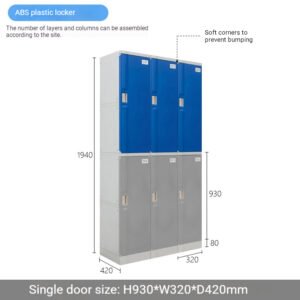
ABS lockers ship knock-down (KD) flat-pack. Two maintenance staff can assemble one 9-door unit in about 35 minutes. A 600-door school project typically installs over 3 to 5 days with a crew of four, timed during summer break when buildings are empty.