Your Pool Changing Room Doesn’t Need Rusty Lockers — Here’s What to Use Instead
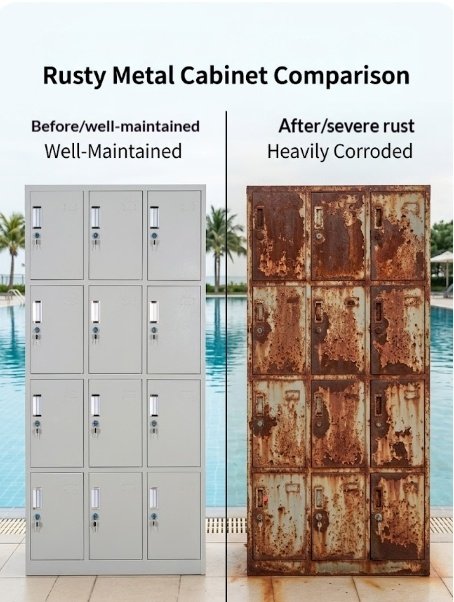
If you’ve ever walked into a pool changing room and caught that familiar whiff of rust and damp, you already know the problem. Metal lockers look fine on day one. Give them six months near chlorine, humidity, and wet swimsuits, and they start telling a different story.
I’ve been in the storage equipment business for over a decade. I’ve watched the same cycle repeat across dozens of facilities: install steel lockers, watch them corrode, replace them, repeat. It’s not cheap, and it’s definitely not necessary.
Why Metal Lockers Fail in Pool Environments
Here’s what actually happens. Chlorine in the air reacts with steel. Humidity accelerates it. Before you know it, you’ve got orange stains on the floor, stuck locks, and doors that don’t close right. Maintenance crews end up sanding, repainting, or swapping out individual units — usually within three to five years.
Some facilities try stainless steel. Better, but not bulletproof. Saltwater pools? Even 304-grade stainless struggles. And the price jump is significant.
The real kicker: metal absorbs odors. That “locker room smell” everyone complains about? A lot of it comes from the material itself, not just the users.
What Pool Operators Are Actually Switching To
Over the past few years, more aquatic centers, hotel pools, and water parks have moved to ABS plastic lockers. Not because it’s trendy — because the math finally caught up.
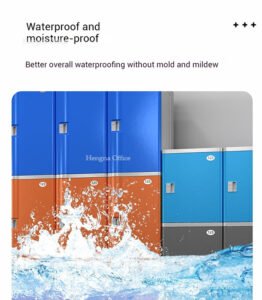
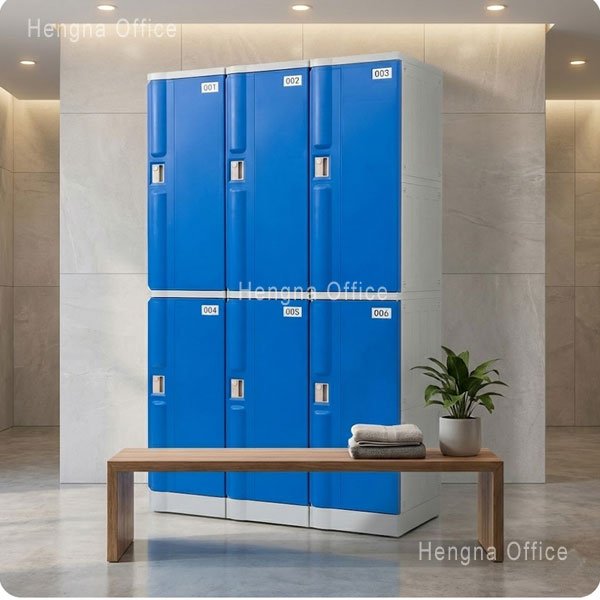
ABS doesn’t rust. Ever. It’s a thermoplastic, so there’s no metal to oxidize. Chlorine, saltwater, constant humidity — none of it touches the structural integrity. You can install them right next to the shower area and not worry.
They’re also non-porous. Wipe them down, and they’re clean. No lingering smells, no bacteria hiding in corroded corners. For public pools and spas where hygiene standards matter, that’s a genuine operational advantage.
The Ventilation Detail Most People Miss
Good plastic lockers aren’t just waterproof boxes. The better ones come with built-in ventilation — slats or louvers that let air circulate. Wet towels and swimsuits dry faster, which cuts down on mold and that stale odor problem entirely.
If you’re specifying lockers for a new build or renovation, look for this feature. It’s the difference between lockers that work and lockers that actually stay pleasant to use.
pool changing room plastic locker rust proof Installation and Long-Term Costs
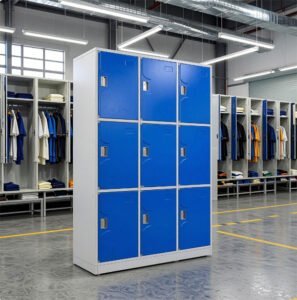
Here’s where the spreadsheet gets interesting. A quality ABS plastic locker runs roughly one-third the weight of a steel equivalent. Two people can position and assemble a bank of twelve in under half an hour. Knock-down design means you can ship more units per container, and onsite labor drops.
No repainting. No rust treatment. No replacement doors every other season. The maintenance line item basically disappears.
I’ve talked to facility managers who made the switch five years ago. Not one has replaced a unit yet. Compare that to the metal locker cycle, and the total cost of ownership isn’t close.
What to Check Before You Buy
Not all plastic lockers are equal. A few things worth verifying:
- Material grade: Ask specifically for ABS, not generic polypropylene. ABS is harder, more impact-resistant, and holds its shape better over time.
- Lock compatibility: Make sure the doors accept standard padlocks or your preferred lock type. Some cheaper units skimp on hardware fit.
- Modularity: Can you add units later? Reconfigure the layout? Knock-down systems should give you that flexibility.
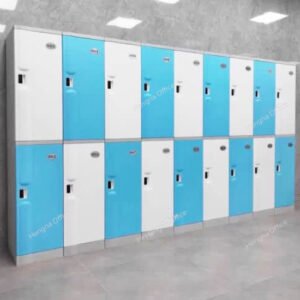
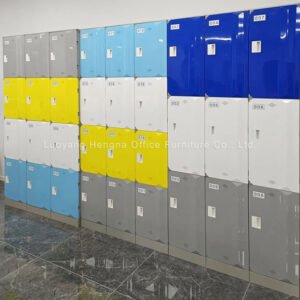
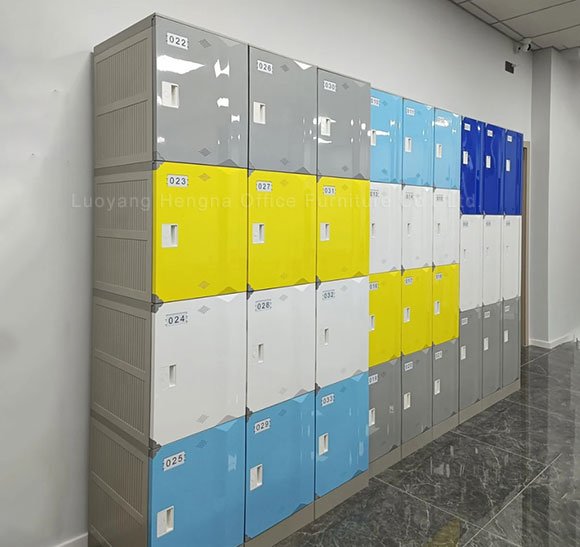
- Color options: Most ABS lockers come in standard colors — gray, blue, green, red. Larger orders can usually match specific schemes if you plan ahead.
The Bottom Line
Pool changing rooms are tough on equipment. The combination of water, chemicals, and heavy daily use weeds out anything that isn’t genuinely suited for the job.
Metal lockers had their era. For dry environments, they still make sense. But around pools? The maintenance burden, replacement cycle, and hygiene issues add up fast.
ABS plastic lockers aren’t a compromise. In this specific environment, they’re the upgrade. If you’re specifying storage for a pool project — new build or retrofit — it’s worth running the numbers on a material that won’t be fighting the room it’s installed in.