Plastic Lockers for Spas and Aquatic Centers: Chlorine, Humidity, and Disinfectant Resistance
Three Things That Destroy Lockers in Wet Facilities
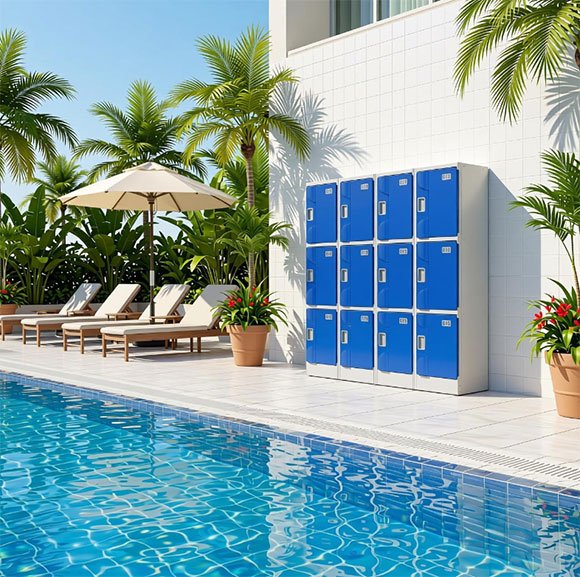
A spa locker room attacks storage from three directions at once. Chlorine vapor from the pool area drifts through the ventilation system. Humidity stays above 80% for 12-plus hours every day. And cleaning crews use disinfectants that would strip the finish off a car.
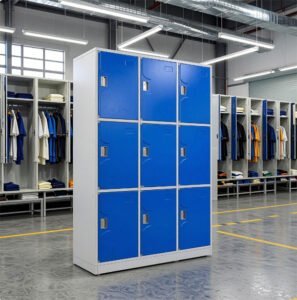
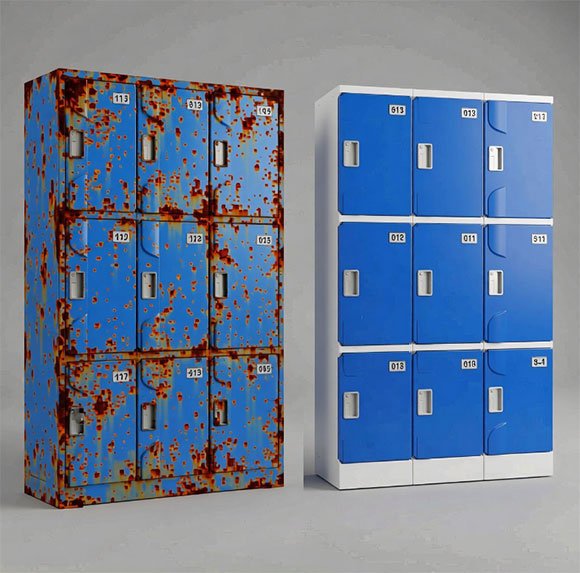
Metal lockers fail against all three. The chlorine accelerates rust formation — what takes 12 months in a dry gym happens in about 3 months next to a pool. The constant humidity keeps metal surfaces damp, so rust never stops once it starts. And the disinfectants eat through protective coatings faster than repainting schedules can keep up.
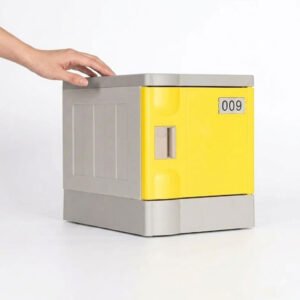
ABS plastic doesn’t react to any of them. The material is chemically inert to chlorine compounds, doesn’t absorb water, and handles commercial-grade disinfectants without surface degradation. That’s not marketing — that’s chemistry. ABS is the same polymer family used in chemical laboratory sinks and drain pipes for a reason.
What Chlorine Does to Different Materials
| Material | Chlorine Resistance | After 2 Years Poolside |
|---|---|---|
| Galvanized steel | Poor — zinc coating dissolves | Rust at seams, edges, hinges |
| Stainless steel 304 | Moderate — pitting in high-chlorine air | Surface pitting, brown spots at welds |
| Powder-coated steel | Poor — coating resists, scratches don’t | Rust blooms from any scratch |
| ABS plastic | Excellent — chemically inert | No visible change |
| HDPE plastic | Excellent — same family as chemical drums | No visible change |
The Disinfectant Problem Nobody Mentions
Spa and aquatic center cleaning protocols use aggressive chemistry — and they should. Quaternary ammonium compounds, hydrogen peroxide solutions, diluted bleach. These chemicals keep guests safe but destroy conventional locker surfaces over time.
Powder coating on steel develops micro-cracks after repeated disinfectant exposure. Once the coating is compromised, liquid seeps underneath, rust starts between the coating and the metal, and the coating lifts off in sheets. You see this on lockers near pool entrances — peeling paint, brown stains underneath, a constant maintenance headache.
ABS is non-porous and chemically resistant. Disinfectant sits on the surface, does its job, and gets wiped off. Nothing penetrates. Nothing lifts. The cleaning crew treats it the same way they treat a countertop. We’ve had facilities tell us their ABS lockers look the same after 4 years of daily disinfectant wipe-downs — just with a few scratches from normal use. Compare that to painted steel in the same environment: by year three, the maintenance log shows monthly rust touch-ups and at least one door replacement per quarter. The cost difference isn’t in the purchase order. It’s in the maintenance log.
Design Details Worth Checking Before You Buy
- Sloped tops. Flat-topped lockers collect water from condensation and splashes. Sloped tops shed it. After a year next to a pool, the difference is a water stain line versus nothing.
- Ventilation without weak points. Louvered vents should be molded into the door during production, not drilled as a secondary step. Drilled vents leave raw edges that trap moisture. Molded vents are smooth throughout — water runs off.
- Base clearance. Lockers should sit on raised feet with a gap underneath. When the floor gets mopped, water passes under the locker, not into it. Metal lockers with flush bottoms rust upward from the floor.
- Stainless hardware. Hinges, latch plates, and screws should be 304 stainless steel. Not coated steel. Not zinc-plated. Solid stainless, same grade as marine hardware.
Layouts That Work for Different Facility Types
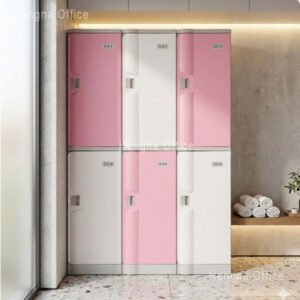
Day-use lockers on the pool deck: 4-tier or 6-tier compact doors for phone, wallet, towel. High throughput — users in and out within two hours. Changing room lockers: 2-tier with upper compartment for street clothes and lower for shoes and bag. Staff lockers: 1-tier tall units with internal shelf and clothes rod. VIP spa suites: custom color-matched units with RFID wristband locks.
One thing we learned from installations at multiple aquatic centers: put the day-use lockers away from the main changing room entrance. If they’re right at the entrance, wet foot traffic creates a bottleneck. Place them along a side wall 3-4 meters inside — traffic spreads out, congestion drops, and the floor in front of the lockers stays drier.
Color Coding for Wet and Dry Zones
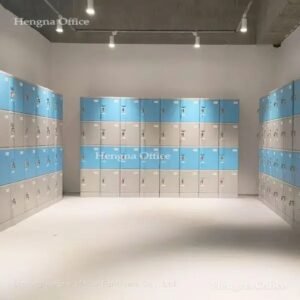
Aquatic centers benefit from simple color zoning. Use one color for pool-deck day lockers — visible from across the deck, easy to direct guests: “Blue lockers, left side of the pool.” Use a different color for changing room units where guests spend more time. Use a third for staff and maintenance lockers in back-of-house areas. This costs nothing extra since ABS color is molded in — you’re just choosing different colors from the same palette when you order. Lifeguards and front-desk staff learn the system in a day. Guests figure it out without reading signs. For facilities with separate lap pool and leisure pool areas, the color system also prevents the “I left my towel in the wrong locker room” problem that front desk deals with daily. A facility in Australia used sky blue for leisure pool, navy for lap pool, and white for staff areas — their guest satisfaction survey showed a drop in lost-and-found locker items in the first month after the color system went in. The color coding also simplifies maintenance: when a door needs replacement, the maintenance request says “blue locker near lane 3” instead of “locker number 47 in the pool area.” Staff find it in seconds. The pool operator calls it the cheapest operational improvement they never thought of.
FAQ
Q: Will the color fade from chlorine exposure?
A: No. ABS color is molded in — chlorine compounds don’t bleach it. Units installed poolside for 3+ years show no measurable color shift.
Q: Can they handle semi-outdoor installation?
A: Under a canopy or covered walkway — yes, specify UV-stabilized ABS. Fully exposed — not recommended without additional weather protection.
Q: Do you provide drainage accessories?
A: Sloped tops are standard. Optional: integrated drip trays and wall-mounted drainage channels for floor-cleaning runoff.
Q: What kind of warranty applies in high-chlorine environments?
A: One-year standard product warranty. ABS material performance in chlorine-rich air is a material property, not a coating — it doesn’t degrade over time. We have installations at aquatic centers running 4+ years with zero chlorine-related warranty claims.
Bottom line for aquatic facility buyers: The locker material that survives poolside is not the one with the best paint. It is the one that does not need paint at all. ABS and HDPE — injection-molded, solid color, zero metal content — handle chlorine, humidity, and disinfectants as material properties, not as treatments that wear off. When you compare quotes, ask each supplier what their lockers will look like after 4 years of daily exposure to pool chemicals. If the answer starts with “with proper maintenance,” you are looking at the wrong material.