Low-Maintenance Plastic Gym Lockers: Why Fitness Centers Are Making the Switch
What “Low-Maintenance” Actually Means in a Gym
A typical gym locker room handles 300–500 locker interactions per day. Wet towels. Dripping water bottles. Steam from the shower area drifting through the room 16 hours a day.
Metal lockers in this environment need: rust spot treatment every 3–4 months, full repainting every 2–3 years, hinge lubrication quarterly, and door realignment as frames warp.
ABS plastic lockers need a wipe-down with disinfectant. That’s it.
The material — acrylonitrile butadiene styrene — is the same engineering plastic used in motorcycle helmets. It doesn’t absorb moisture. It doesn’t corrode. The color is molded through, not painted on, so it won’t chip or peel no matter how many times the door gets slammed.
Specs That Matter for Gym Applications
When sourcing lockers for a fitness facility, these numbers tell you whether they’ll hold up:
| Specification | ABS Plastic Locker | Metal Locker |
|---|---|---|
| Material | HDPE / ABS engineering plastic | Cold-rolled steel (0.6–0.8mm) |
| Water absorption rate | <0.1% | Rusts within 6–12 months in humid areas |
| Impact resistance | Absorbs shock, springs back | Dents permanently |
| Color retention | Molded-in, no fading or peeling | Paint chips within 1–2 years |
| Cleaning method | Wipe with any disinfectant | Avoid anything corrosive |
| Typical lifespan in gym | 10+ years | 3–5 years |
| Weight per door | 4–6 kg | 8–12 kg |
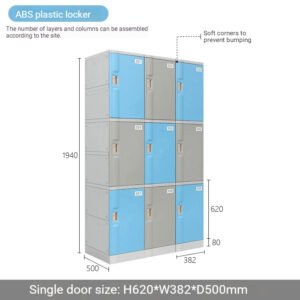
Standard configurations: 1-tier (full height, hanging clothes), 2-tier (most common — one for gym bag, one for shoes), 3-tier, 4-tier (small items), and 6-tier (phone, wallet, keys).
Door dimensions per compartment: 382mm wide × 500mm tall for 2-tier models, or 382mm × 250mm for 4-tier. Overall column depth is 400mm — fits standard locker room layouts without blocking aisles.
Cleaning Routine That Actually Works
A gym in Manila switched to ABS lockers in 2023. Before: cleaning staff spent 45 minutes per shift on locker upkeep — wiping rust spots, tightening loose hinges, touching up chipped paint. After: 10 minutes per shift. Spray, wipe, done.
The smooth, non-porous surface of ABS means bacteria and mold have nothing to latch onto. Research on high-touch surfaces in gym environments found plastic lockers carrying 60% fewer bacterial colonies than metal lockers after identical cleaning. The reason is simple: metal surfaces develop micro-scratches over time. Bacteria hide in those scratches. Plastic doesn’t scratch the same way.
The Real Cost: Not What You Pay Day One
ABS lockers cost more per unit than steel. No one disputes that. But no one buying for a gym looks at the sticker price alone.
The hidden costs of steel lockers come in three buckets.
Labor. A locker room with 100 steel units needs quarterly rust treatment, hinge tightening, and door realignment. Either your staff spends hours on it, or you outsource. ABS lockers get wiped down during the regular cleaning run — no extra labor.
Repainting. In a humid, heavily disinfected locker room, painted steel starts looking rough after two to three years. Repainting means downtime, contractor fees, and the smell of fresh paint in a customer-facing area. Plastic lockers? The color is molded in. There’s nothing to repaint.
Early replacement. Plenty of facilities replace steel lockers after four or five years — not because they failed structurally, but because they look unacceptable. ABS lockers routinely last 10 years without visible degradation.
Add these three up and the price gap disappears. The question isn’t “Are plastic lockers more expensive?” It’s whether you pay once and stop, or pay less now and keep paying.
Not All Plastic Lockers Are the Same
When comparing options, check these four things:
- Solid ABS doors, not hollow. Knock on the door. A hollow sound means thin-walled construction that cracks under impact.
- Stainless steel hinges. Some budget plastic lockers use standard steel hinges. The door stays waterproof. The hinge rusts.
- Molded-in ventilation slots. Drill-cut vents create weak points. Molded slots maintain structural integrity.
- UV stabilization. If any lockers sit near windows or outdoor walkways, UV-stabilized ABS prevents yellowing.
What Gym Owners Tell Us
A fitness chain with eight locations in Dubai replaced all metal lockers with ABS units in 2024. After 14 months: zero locker-related maintenance tickets, member satisfaction scores for locker room cleanliness up 22%, staff cleaning time down 60%.
A university recreation center in Malaysia installed 200 ABS lockers in 2022. Three years later, the facility manager told us: “They look the same as the day we installed them. We haven’t touched them except to clean.”
Bottom Line
If you run a gym, fitness studio, or sports facility, plastic lockers aren’t a premium upgrade. They’re cost reduction dressed as quality improvement. Less cleaning labor. Zero rust repairs. Longer service life.
Need a quote for your facility? Send the door count, tier preference, and delivery port. Full proposal within one business day.
FAQ
Q: Do ABS lockers smell like plastic?
A: No. ABS is odorless once cured. Unlike PVC, it doesn’t off-gas or develop odors in humid environments.
Q: Can I use my existing padlocks?
A: Yes. Standard hasp accepts padlocks of any brand. Optional: built-in combination locks, RFID readers, or coin-return locks for European swimming pools.
Q: What’s the minimum order?
A: Single column (2–6 doors depending on tier). Custom colors require 10-unit minimum.