Why Universities Choose ABS Plastic Lockers Over Metal: Lifecycle, Noise, and Safety Data
The Procurement Shift: What Happened Around 2022
University facility directors don’t replace lockers on a whim. The decision goes through a capital expenditure committee, a sustainability review, and at least two rounds of budget approval. When multiple universities across Southeast Asia, the Middle East, and Europe independently switched from steel to ABS lockers between 2022 and 2025, it wasn’t a coincidence. The data caught up with the material.
Lifecycle Cost: The Argument Finance Actually Approves
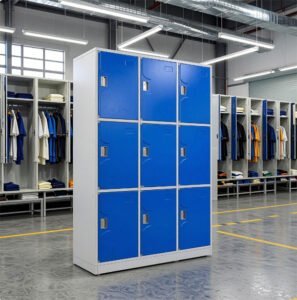
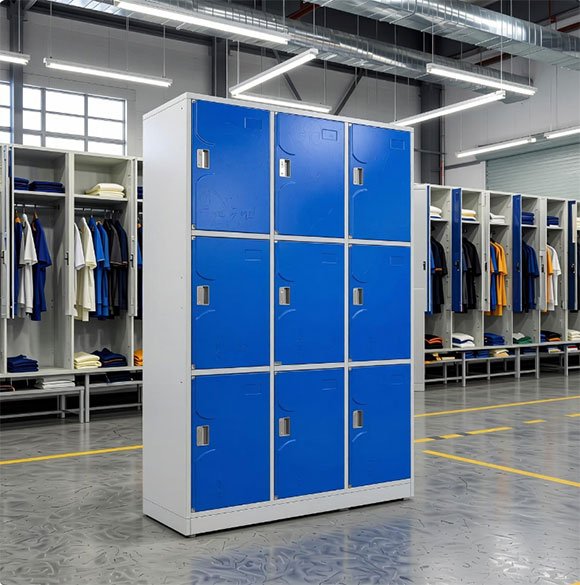
University procurement looks at a 10-to-15-year horizon. Steel lockers in a campus setting: years 1–3 they look fine, minor scratches and hinge loosening, cleaning staff wipes them down. Years 4–6: rust spots at the bottom edge where mops splash water, doors don’t close flush because frames have shifted, first repainting quote lands on the facility director’s desk — priced per door, not per column. Years 7–10: second repainting or piecemeal replacement begins, the locker room looks inconsistent.
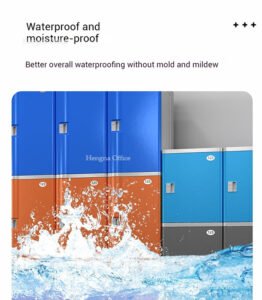
ABS lockers, same timeline: wipe them down. That’s the maintenance schedule for the first decade. No repainting because there’s nothing to repaint. No rust because the material contains no metal. No door realignment because ABS stays dimensionally stable across indoor temperature ranges. The upfront price difference — roughly 30–50% more for ABS — disappears somewhere around year five. After that, the savings come straight out of the operational budget.
Several of our university clients put it this way: steel lockers are a recurring operational expense disguised as a one-time capital purchase. ABS lockers are an actual one-time capital purchase. The finance department that signs off on the initial PO doesn’t always see the difference. The facility director who manages the maintenance budget definitely does.
Noise: What Students Actually Complain About
Walk through a university hallway lined with steel lockers during class change. Two hundred metal doors slamming at once is not background noise. It’s loud enough that some universities route lecture halls away from locker corridors.
ABS doors close with a dull thud, not a metallic clang. The plastic absorbs impact energy instead of transmitting it as sound. Measured at one meter: steel locker door closing registers 78–85 dB — comparable to a vacuum cleaner. ABS door at the same distance: 62–68 dB — comparable to normal conversation. Quieter hallways mean fewer noise complaints from faculty, better conditions for adjacent classrooms, and a less stressful campus environment.
Safety: What Risk Management Flags
University risk assessments flag storage lockers for two things: sharp edges at pedestrian height — a head injury risk during trips or falls — and electrical conductivity, where a damaged wire touching a metal locker bank creates a hazard.
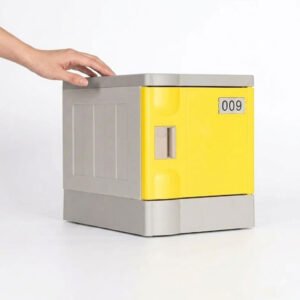
ABS lockers address both. Rounded edges on all panels come from the injection molding process — they aren’t an add-on. And ABS is non-conductive. In a lab building or science facility, that’s a documented safety differentiator that procurement committees record. We’ve seen a science faculty specifically exclude metal lockers from their building spec after an electrical incident in a neighboring university — the risk assessment advisor flagged it and it went straight into the tender requirements.
Hygiene: Dormitory-Level Demands
University lockers serve a population that includes 18-year-olds living in dorms for the first time. The hygiene baseline isn’t high. Wet towels get left inside. Half-eaten snacks end up forgotten. ABS surfaces are non-porous — bacteria can’t penetrate the material. Steel locker surfaces, especially once scratched, provide microscopic grooves where bacteria colonies establish. A standard wipe-down cleans ABS completely. Steel requires more aggressive cleaning to reach bacteria inside scratches and rust pits.
Branding: Campus Colors on Every Door
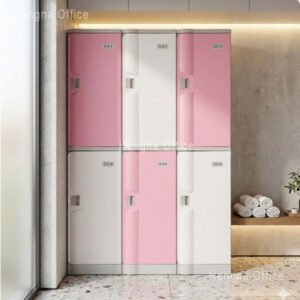
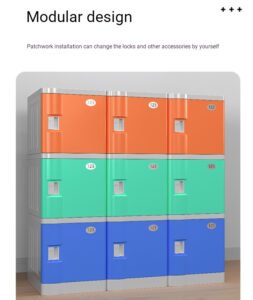
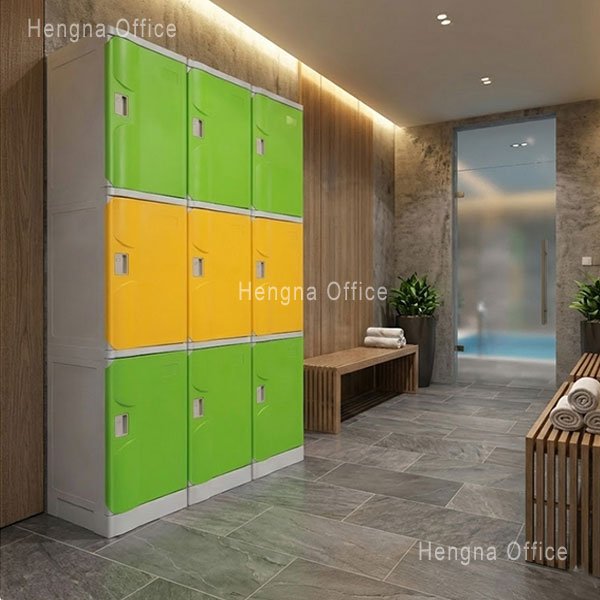
Universities spend heavily on campus identity. The locker room is often the most-used student facility that carries zero branding. ABS lockers can be color-matched to university colors at the molding stage — logos, crests, or department names screen-printed on doors. The result: a locker bank that looks like it belongs to the campus, not a generic grey block ordered from a catalog. Students notice this. A university in the UAE ordered lockers in their campus green with the university crest on every third door — the student feedback survey that year specifically mentioned the locker room as “finally looking like part of the campus.”
Phased Rollouts Across Multiple Buildings
University procurement rarely replaces every locker on campus at once. Typical pattern: Science Building this year, Arts Building next year, Student Center the year after. The modular ABS system works well for this. Colors, door styles, and lock types stay consistent across phases even when ordered 12 or 24 months apart. The supplier keeps the color formula and mold on file — reorder the same spec and get units that match the existing installation visually and mechanically. Maintenance staff who assembled phase one train the crew for phase two. By phase three, the process runs on autopilot. This phased approach also solves the capital budget problem — instead of one large appropriation that gets debated and delayed, three smaller ones spread across fiscal years that each fall under a different approval threshold. One state university system used this exact approach across five campuses over three years: year one pilot at the flagship campus, years two and three rollout to satellite campuses using the same spec with minor color adjustments per campus.
FAQ
Q: Can you supply university references?
A: Yes — higher education institutions in Malaysia, the UAE, and several European countries. Project sheets available under NDA.
Q: Lead time for a campus-wide project (200+ units)?
A: Standard colors: 4–6 weeks. Custom university colors with branding: 6–8 weeks. Phased delivery by building available.
Q: Do you offer installation or supply only?
A: We supply with detailed assembly docs. Most university maintenance teams handle it in-house — snap-fit system, no specialized tools needed.
Q: Do the lockers meet accessibility requirements?
A: Yes. Door handles, lock positions, and compartment heights can be configured to meet ADA, EN 1729, or local accessibility standards. We adjust the spec during quoting — just mention the standard your campus follows and we build to it.
Summary for procurement: ABS lockers cost more on the purchase order and less everywhere else — maintenance, noise complaints, injury reports, replacement parts. The finance office sees the PO. The facility director sees the total cost of ownership over a decade. When those two perspectives meet in a procurement review, the ABS line item survives. The steel one gets questioned. That is why universities are switching — not because one material is newer, but because the math works when you run it past year five.