Rust-Proof Locker for Swimming Pools – ABS Outlasts Metal in Southeast Asian Humid Climates
If your swimming pool or water park is still using steel lockers in the changing room, you already know what happens. Orange rust spots on the bottom edges within a year. Lock mechanisms that start sticking. Doors that don’t close flush anymore. This is not a cheap locker problem—it is a material problem. Steel, even galvanized or powder-coated, reacts with chlorine, moisture, and salt air. In a pool environment, that reaction starts the day the locker is installed.
The Corrosion Timeline in Tropical Pool Environments
The typical timeline in a Southeast Asian pool or aquatic center: months 1-6 look fine. By month 8, rust appears along the bottom edge where mopping water and wet feet hit the panel. The powder coating chips at corners from carts and cleaning equipment. Each chip opens a path for moisture.
Failure progression:
1. Months 1-6: Powder coating intact, appearance acceptable
2. Months 6-12: Micro-cracks develop in coating from thermal cycling
3. Months 12-18: Moisture penetrates coating, oxidation begins
4. Months 18-24: Visible rust spots appear at seams and edges
5. Years 2-3: Rust spreads, door alignment shifts, locks stick
6. Years 3-5: Structural integrity compromised, replacement needed
The corrosion process is electrochemical: chlorine creates a highly corrosive environment, salt air accelerates oxidation, high humidity (80-95% RH) provides constant electrolyte, and temperature fluctuations cause condensation inside lockers.
Real-world data: A resort pool in Phuket installed powder-coated steel lockers in 2020. By month 10, rust appeared at the base of 60% of units. By year 2, 40% of lock mechanisms had failed. Complete replacement was required after just 3 years—a costly, disruptive project for the facility. Meanwhile, an ABS installation at a nearby water park showed zero degradation after 5 years.
Why galvanized steel fails too: Zinc coating (20-50 microns) is rapidly consumed by chlorine. Cut edges and drill holes have no zinc protection. Welded seams are vulnerable points. An aquatic center in Kuala Lumpur tried galvanized steel—after 18 months, zinc coating completely consumed in high-contact areas, base steel rusting at accelerated rate, white rust (zinc oxide) forming on surfaces, lock mechanisms seized from corrosion. Estimated lifespan: 4 years maximum.
Why wood lockers fail: Humidity causes swelling and warping within months. Veneer peels and delaminates. Mold grows in porous surfaces. Screw joints loosen from repeated swelling/shrinking. Persistent musty odor impossible to eliminate. A hotel pool in Bali installed teak lockers—within 8 months, 30% of doors warped, mold visible on 50% of units, complete replacement required after 14 months. Complete replacement with zero salvage value.
What ABS Does Differently
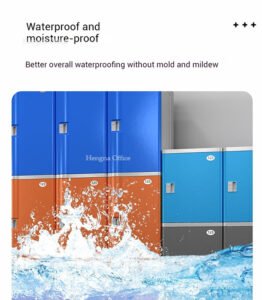
ABS (acrylonitrile butadiene styrene) is the same material used in motorcycle helmets and automotive bumpers. It does not react with chlorine, water, or salt. The locker body contains zero exposed metal. Color runs through the material, not painted on, so there is nothing to chip or peel.

Rust-Proof Locker for Swimming Pools Key advantages:
- Zero metal components: Nothing to rust, corrode, or oxidize
- Chemical inertness: Immune to chlorine, salt, and cleaning chemicals
- Color-through material: Scratches don’t expose bare metal
- Impact-resistant: Absorbs abuse from carts, cleaning equipment, and daily use
- UV-stabilized: Maintains color and strength in sunlight
- Temperature stable: -20°C to 80°C without deformation
- Non-porous surface: Resists mold, mildew, and bacterial growth
- Lightweight: 60% lighter than steel, easier for elderly and children
Real-world validation: A water park in Singapore installed ABS lockers in 2019. After 5 years of tropical climate exposure: zero rust, zero corrosion, all doors operate smoothly, appearance like new. Maintenance cost: a small fraction of what the facility had been spending on steel lockers.
Specifications
| Feature | Spec | Pool Environment Benefit |
|---|---|---|
| Material | High-impact ABS, injection molded | Zero metal—nothing to rust or corrode |
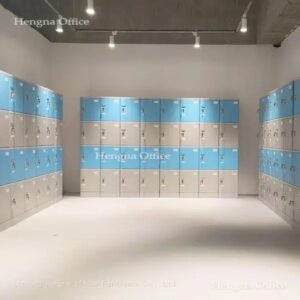
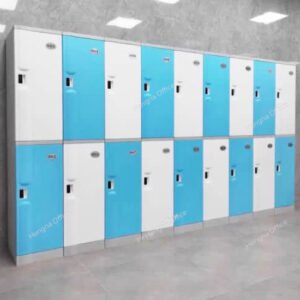
| Doors | 6 doors, 3 columns x 2 tiers | Compact footprint for busy changing rooms |
| Ventilation | Built-in louver vents per door | Airflow dries wet swimwear between visits |
| Lock | Cam lock standard; combination optional | No exposed metal lock components to seize |
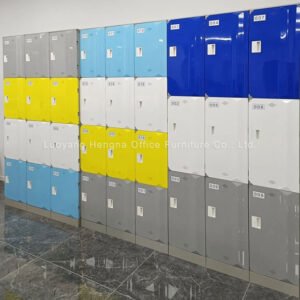
| Color | Integral color, 8 standard options | Scratches don’t expose bare metal—no chip points |
| Weight | ~2.1 kg per door (vs. ~5 kg steel) | Easier for elderly and children to operate |
| UV Resistance | UV-stabilized formula | Color and strength maintained in sunlight |
| Surface | Smooth, non-porous | Resists mold, mildew, and bacterial growth |
Each compartment accommodates swimwear, towel, goggles, swim cap, personal items, and shoes. Ventilation slots allow airflow to dry wet items between visits. Door width accommodates bulky towels and beach bags. Internal hooks for hanging wet swimwear.
10-Year Total Cost of Ownership
Steel lockers in pool environments need rust treatment, lock replacements, hinge adjustments, and deep cleaning every year—and most are replaced after 3-5 years anyway. ABS lockers need only routine cleaning and occasional lock replacement.
Result: Roughly 60-65% lower total cost over 10 years for a typical installation, with break-even reached within 2-3 years.
Common Questions
Will ABS fade in direct sunlight?
ABS is UV-stabilized to resist fading and degradation. After 5 years of tropical sun exposure, color remains consistent. For areas with extreme UV (high altitude, equatorial), we offer enhanced UV-resistant formulations.
Can ABS handle saltwater pools?
Yes. ABS is completely immune to saltwater corrosion. Unlike metal lockers that accelerate corrosion in salt environments, ABS shows zero degradation. Ideal for coastal pools, beach resorts, and saltwater therapy pools. Salt crystals on the surface wipe off with damp cloth—no chemical reaction, no pitting, no discoloration.
How do we prevent mold on the surface?
ABS non-porous surface prevents mold penetration. Regular cleaning with standard pool disinfectant keeps surfaces clean. Any surface mold wipes off easily—unlike wood or fabric-lined lockers where mold penetrates and persists. Daily wipe-down with damp cloth is sufficient. No special cleaning products required.
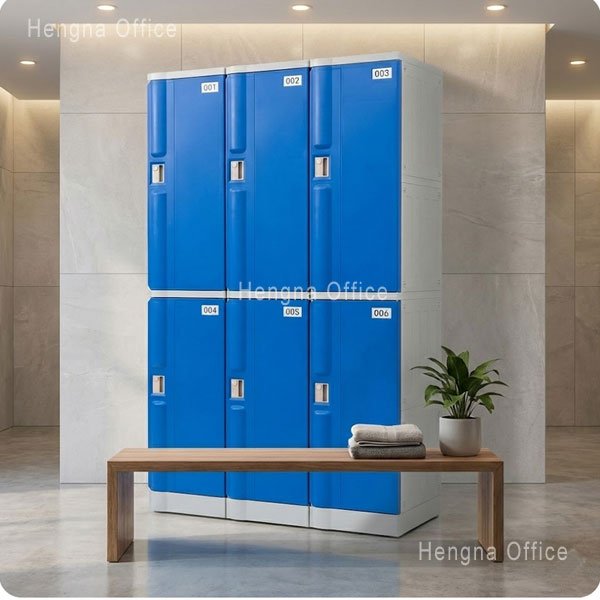
Swimming pool and water park environments demand lockers that withstand constant moisture, chlorine exposure, and tropical humidity. ABS plastic rust-proof pool lockers deliver zero rust or corrosion in any pool environment, 15+ year lifespan versus 3-5 years for steel, 63-68% lower total cost of ownership over 10 years, and maintenance costs reduced to a small fraction of steel annual upkeep.
The material science is straightforward: ABS contains zero metal components that can rust or corrode. Color runs through the entire material, so scratches don’t expose bare metal. UV-stabilized formula resists fading and degradation in tropical sun. Non-porous surface prevents mold penetration and wipes clean with standard pool disinfectant.
For facility managers evaluating locker options for pool environments, the decision comes down to this: steel lockers will rust, it is only a question of when. ABS lockers will not rust, period. The long-term savings per 100 units make the investment decision straightforward.
Contact us for pool locker solutions that eliminate rust problems permanently.