Plastic vs. Metal School Lockers: Which Is Better for Modern Educational Facilities?
As modern educational facilities undergo significant upgrades worldwide, the choice of campus infrastructure is shifting. For decades, traditional metal lockers were the undisputed standard. However, school administrators today face recurring headaches: rust in humid locker rooms, dented doors in high-traffic hallways, and the constant need for repainting.
In the search for longevity and safety, ABS (Acrylonitrile Butadiene Styrene) plastic lockers have emerged as the premier alternative. As a leading professional manufacturer of high-grade storage solutions, we provide this in-depth analysis of why ABS is redefining the standards for modern campus storage.
1. Understanding ABS: The Engineering Grade Revolution
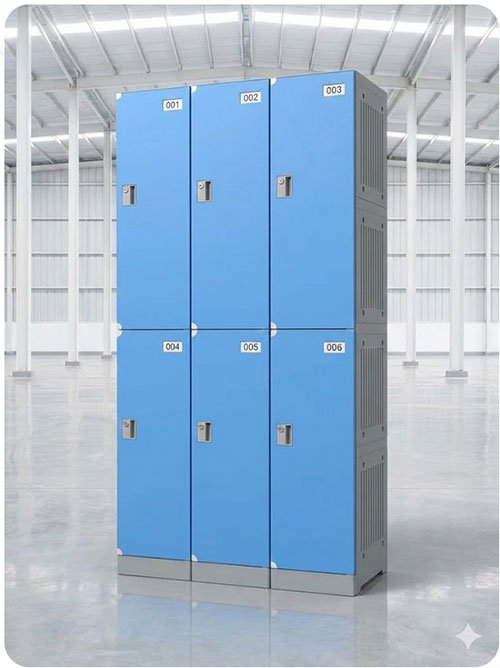
To understand why plastic is overtaking metal, we must first look at the material science. ABS is not “cheap plastic”; it is a high-impact engineering thermoplastic. It combines the strengths of three unique components:
- Acrylonitrile: Provides chemical resistance and thermal stability.
- Butadiene: Delivers incredible toughness and impact resistance.
- Styrene: Offers a clean, glossy finish and excellent processability.
This combination results in a locker that is virtually indestructible under normal school conditions, unlike thin-gauge sheet metal.
2. Head-to-Head Comparison: ABS vs. Metal Lockers
When evaluating school furniture, facility managers must look beyond the initial purchase price. The following table breaks down the critical performance metrics.
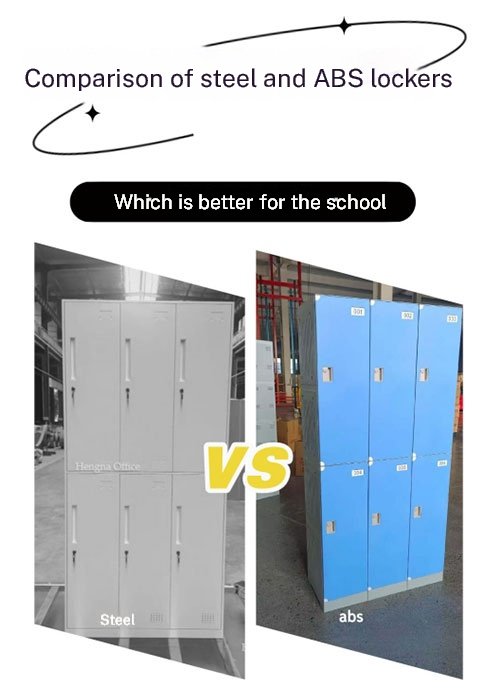
Plastic vs. Metal School Lockers Performance Comparison Table
| Feature | ABS Plastic Lockers | Traditional Metal Lockers |
| Corrosion Resistance | 100% Waterproof & Rust-proof | Prone to rust if coating is scratched |
| Safety Design | Integrated rounded corners; no sharp edges | Sharp edges and corners; risk of cuts |
| Impact Resistance | High (Elasticity allows it to absorb shocks) | Low (Dents easily and permanently) |
| Maintenance | Minimal (Soap and water cleaning) | High (Requires regular repainting/sanding) |
| Noise Levels | Silent operation (Soft-close feel) | Loud, metallic clanging (High decibels) |
| Lifespan | 15+ years (Even in humid areas) | 3-7 years in humid areas; 10+ in dry |
| Hygiene | Non-porous, antibacterial surfaces | Porous rust spots can harbor bacteria |
3. Solving Real-World “Pain Points” in Education
Modern schools are diverse environments. A “one-size-fits-all” locker approach often leads to premature failure. Here is how ABS lockers solve specific problems across different campus zones:
A. Gymnasiums & Swimming Pools: The End of Rust
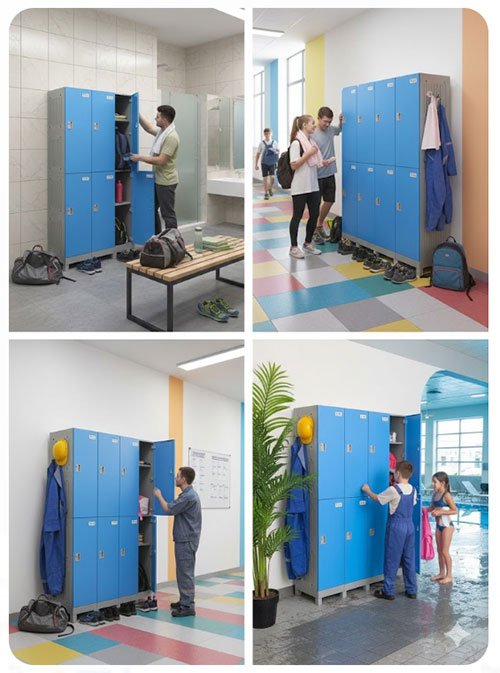
The Problem: In environments with 80-95% humidity, metal lockers begin to show rust within 3 to 6 months. Within two years, structural integrity is often compromised, leading to jagged, dangerous edges. The ABS Solution: ABS is inherently waterproof. It cannot rust. A case study of a secondary school swimming facility showed that after switching to ABS lockers, annual maintenance costs dropped by 83%, as the staff no longer needed to treat rust or replace corroded hinges.
B. K-12 Classrooms: Safety and Aesthetics
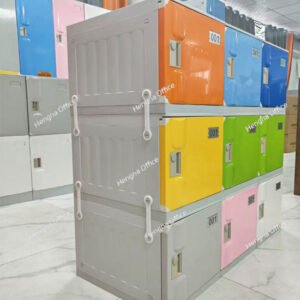
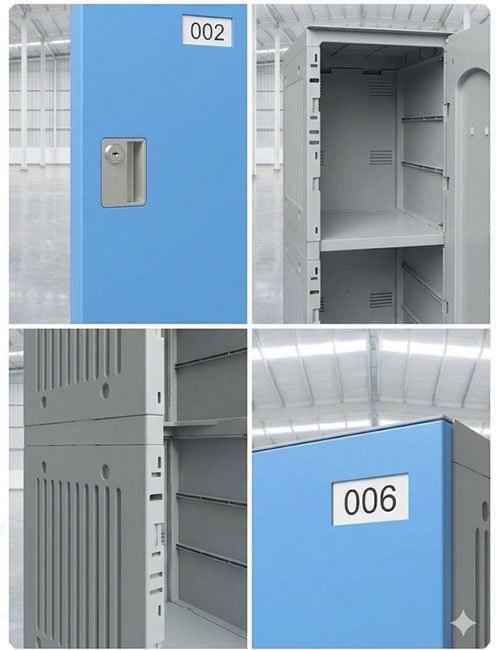
The Problem: Active children and sharp metal corners are a recipe for liability. Furthermore, traditional grey metal lockers can create a cold, “institutional” atmosphere. The ABS Solution: * Safety First: ABS lockers are manufactured using injection molding, allowing for smooth, rounded edges that prevent bruises and cuts.
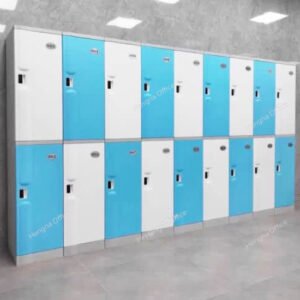
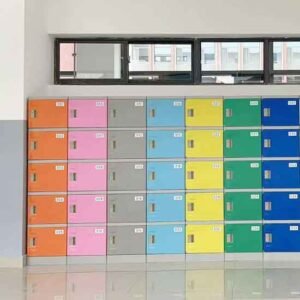
- Vibrant Learning: Available in a wide spectrum of colors, these lockers can be used for “color-coding” grades or enhancing school spirit, creating a more welcoming, modern psychological environment for students.
C. University Dormitories: The Need for Quiet
The Problem: Metal lockers in narrow dorm hallways act as “echo chambers.” The sound of hundreds of students slamming metal doors at 7:00 AM is a major disruption. The ABS Solution: The natural density of ABS plastic absorbs vibration. Tests show that ABS lockers reduce door-closing noise by up to 70% compared to steel, contributing to a much calmer living and studying environment.
4. Selecting the Right Locker for Each Educational Stage
While ABS is superior in most modern contexts, the best choice depends on the specific user demographic and the environment.
1. Early Childhood (Pre-K and Kindergarten)
- Recommendation: Heavy-Duty Plastic.
- Why: At this age, safety and hygiene are non-negotiable. Plastic lockers are lightweight (preventing finger-pinching accidents) and can be easily sanitized after spills of juice or milk.
2. Middle and High Schools
- Recommendation: Hybrid Approach.
- Why: For standard dry corridors, metal is a budget-friendly option. However, for STEAM labs and Maker Spaces, ABS is preferred because it is resistant to chemical splashes and provides a modular, flexible layout that can be moved as classroom needs change.
3. Higher Education & Staff Offices
- Recommendation: Premium ABS or Wood-Grain Plastic.
- Why: Universities often prioritize “Total Cost of Ownership.” The long-term durability of ABS ensures that the administration doesn’t have to launch a locker replacement project every five years.
5. The Financial Reality: Total Cost of Ownership (TCO)
A common misconception is that plastic lockers are significantly more expensive than metal. However, when you analyze the Total Cost of Ownership (TCO) over a 10-year period, the narrative changes.
- Initial Investment: While basic metal lockers have a lower entry price, high-quality engineering plastic lockers are now price-competitive with mid-range steel units.
- Operational Costs: Metal lockers require periodic “strike-and-paint” maintenance to cover scratches. ABS lockers are “color-through,” meaning the color is consistent throughout the material. A scratch on an ABS locker is nearly invisible and does not lead to structural decay.
- Replacement Cycle: In a high-humidity coastal school, one ABS locker will outlast three generations of metal lockers.
Pro Tip for Buyers: Always ask for the UL94-HB fire rating and ISO certification when sourcing ABS lockers to ensure they meet international safety standards for educational buildings.
6. Sustainability and the “Green Campus”
Modern schools are under pressure to reduce their carbon footprint.
- Recyclability: Both metal and ABS are 100% recyclable.
- Production Impact: Modern ABS manufacturing processes are increasingly energy-efficient. Because ABS lockers last longer, the “replacement frequency” is lower, leading to less waste in landfills over a 30-year building lifecycle.
- Health: ABS is a food-grade, non-toxic material. Unlike some older metal locker paints that may contain VOCs (Volatile Organic Compounds), high-quality ABS is odorless and inert.
Making the Smart Choice for Your Facility
Choosing between plastic and metal lockers is no longer just about the “look”—it is about building a safe, durable, and cost-effective environment for the next generation of students.
While metal lockers remain a viable choice for extremely dry, low-impact storage, ABS plastic lockers are the clear winner for the high-demands of modern education. They solve the age-old problems of rust, noise, and safety while offering a modern aesthetic that metal simply cannot match.
By investing in ABS technology, school administrators are not just buying furniture; they are investing in a maintenance-free future.
Looking for a Reliable B2B Partner?
As a specialized manufacturer of ABS and metal furniture, we offer OEM and ODM services tailored to the needs of international schools and distributors. Whether you need a custom color scheme or a specific modular configuration, our engineering team is ready to help.