Half-Height 1.1m ABS Staff Lockers for Factory PPE Storage & Workshop Changing Rooms
Why 1.1 Meters? The Half-Height Logic for Factory Floors
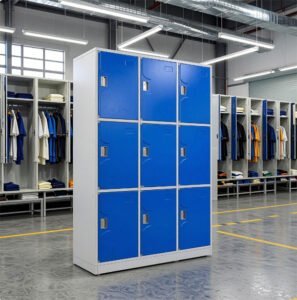
Factory changing rooms don’t need full-height lockers. Workers aren’t storing evening gowns. They need a spot for a helmet, work boots, a high-vis vest, and maybe a lunch box. The 1.1-meter half-height form factor covers all of that without wasting vertical space or blocking sightlines across the room.
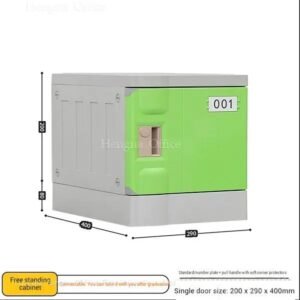
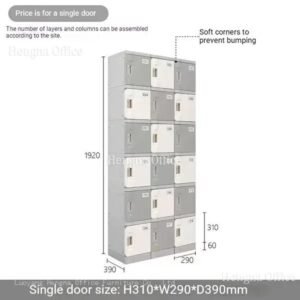
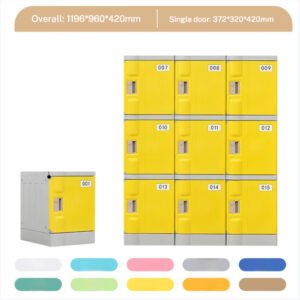
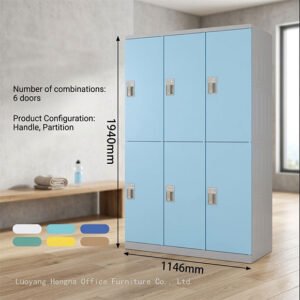
At 1196mm total height, 960mm width, and 420mm depth — with individual compartments at 372×320×420mm — these units leave the upper half of the wall open for ventilation, lighting, or additional shelving. In a room with low ceilings or limited floor area, that matters. Production managers also prefer half-height because they can see across the changing room from the doorway — no hidden corners where someone might be sitting when they should be on the line.
PPE Storage: What Workplace Safety Standards Expect
Personal protective equipment has specific storage requirements in most regulated industries. Helmets shouldn’t be stacked — suspension systems deform under weight. Respirators need airflow to dry between uses. Wet gloves need to air out, not stew in a sealed compartment. A locker that stores PPE badly creates a false sense of organization while degrading the equipment.
The 1.1m half-height design addresses this with internal ventilation ports and a layout that keeps each worker’s PPE separate. Helmets sit on top of the unit where they’re visible — a supervisor can do a walk-by check. Boots go in the bottom compartment. Vest and gloves on the middle shelf. Each door is individually numbered, so the safety officer knows exactly whose PPE isn’t stored correctly.
Material That Survives the Factory Floor
A factory changing room isn’t a spa. Forklift vibrations travel through concrete floors. Dust from production settles everywhere. Workers in steel-toe boots kick doors shut without a second thought.
ABS handles all of this. One-piece injection molding means no weld points, no seams that split under repeated impact. The material resists oil, cutting fluid, and most industrial solvents — a splash from a worker’s sleeve won’t eat through the surface. And it doesn’t dent the way steel does when someone loses their balance and grabs the door for support.
One automotive plant we supplied told us their previous steel lockers lasted about 4 years before the bottom edges rusted through from floor-level moisture. The ABS units have been in for 3 years with no signs of wear beyond surface scuffs. The maintenance supervisor’s comment: “I forgot they were there.” That’s the goal — lockers that don’t make the maintenance list.
| Parameter | Specification |
|---|---|
| Material | High-strength ABS, one-piece injection molding |
| Overall dimensions | 1196 × 960 × 420 mm |
| Compartment size | 372 × 320 × 420 mm per door |
| Construction | Modular snap-fit, no metal screws or welds |
| Locking | Built-in padlock holes, fits industrial padlocks |
| Ventilation | Molded louvered vents (not drilled) |
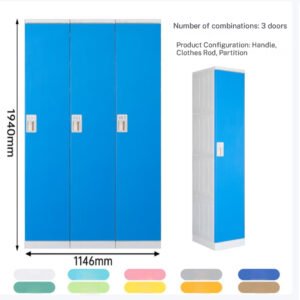
| Colors | 10 standard options |
| Expected service life | 8+ years in industrial environment |
Where These Units Get Deployed
- Automotive assembly plants. Workers on the line need fast access to gloves, sleeves, and safety glasses between shifts. Lockers near the shop floor entrance cut changeover time.
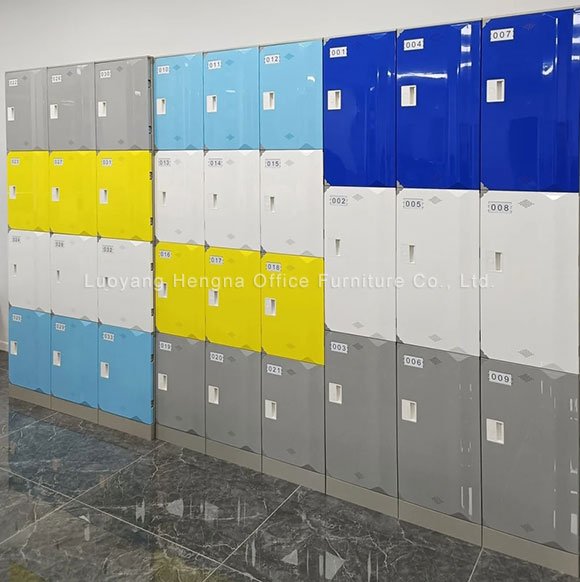
- Food processing facilities. Hygiene regulations require separation of street clothes from work uniforms. Color-coded doors (blue for production, white for QA, green for maintenance) create a visual system auditors can verify in seconds.
- Logistics hubs and warehouses. High turnover of temporary staff. Each door gets a reusable number plate. End of shift, contents cleared, lock removed, ready for the next worker.
- Electronics assembly cleanrooms. ABS doesn’t shed particles the way painted steel does. For ISO Class 7 or 8 cleanroom changing areas, plastic lockers reduce contamination risk at the gowning station.
Assembly: 30 Minutes, Two People, No Special Tools
The snap-fit design connects panels with interlocking tabs. A rubber mallet seats the connections — no drilling, no welding, no specialized labor. Detailed assembly instructions ship with every order, printed with diagrams in English. For facilities expanding in phases, add columns without dismantling existing ones — new columns lock into the existing row.
Cleaning and Maintenance: What the Factory Crew Actually Does
Factory locker rooms get cleaned on a production schedule — typically between shifts or during weekend downtime. Cleaning staff use a pressure washer or a mop and bucket with industrial degreaser. On steel lockers, this accelerates rust — water blasts under door seals, degreaser strips protective coating. ABS lockers handle the same cleaning routine without degradation. The non-porous surface means oil and grease wipe off instead of absorbing into the material. For food-grade facilities that require sanitization logs, the smooth ABS surface passes swab tests that textured or scratched metal surfaces fail. One food processing plant told us their auditor specifically noted the locker room as “cleanable by design” — a phrase that appears nowhere on the ABS spec sheet but shows up in the audit report, which is where it actually matters. The plant’s sanitation supervisor later told us the previous steel lockers generated at least one non-conformance per quarter during audits — rust spots, peeling paint, bacteria in scratches. After switching to ABS, the locker room has been audit-clean for two years straight.
FAQ
Q: Can these go outdoors under a canopy?
A: Under a covered walkway — yes, with UV-stabilized ABS. Fully exposed to rain — add optional weather seals on doors.
Q: What lock types work?
A: Standard hasp fits any padlock with shackle up to 8mm. Optional: built-in combination locks, keyed-alike cam locks, or RFID electronic locks.
Q: Minimum order for custom colors or branding?
A: 10 columns for custom Pantone colors. Logo printing from 20 columns. Recessed number plates included as standard on all units.
Q: How do you handle international shipping for factory projects?
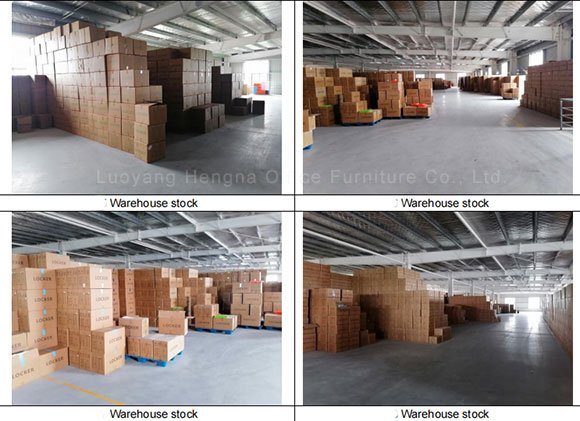
A: All columns ship KD flat pack. We provide a loading plan before the container is sealed so your receiving team knows exactly which pallet has which color and tier. For first-time importers, we walk you through the customs documentation — HS code, packing list format, certificate of origin. Lead time from order confirmation to vessel departure is typically 2–4 weeks depending on configuration and quantity.
The short version for production managers: Half-height ABS lockers solve the factory changing room problem in one purchase. PPE stays organized and ventilated. The material survives vibration, impacts, oil splashes, and industrial cleaning. Snap-fit assembly means the maintenance team handles installation without calling in contractors. And when the factory expands next year, you order more columns from the same spec and clip them into the existing row. No demo. No redesign. Just more lockers that match the ones already working.