What Happens When Hospital Lockers Fail an Infection Control Audit? A Facility Manager’s Guide
Hospital infection control audits are not optional. They are tied to accreditation, funding, and in some jurisdictions, the facility’s operating license. When an auditor walks into a staff changing room and finds rust on locker doors, peeling paint near the floor, or visible biofilm around locker handles, that finding goes into a report. The report triggers a corrective action plan. The plan has a deadline. And the deadline means someone ??usually the facility manager ??has to fix the problem fast.
Locker rooms are one of the most common areas to receive audit findings, and one of the least discussed in infection control planning. Here is what facility managers need to know ??before the auditor walks in.
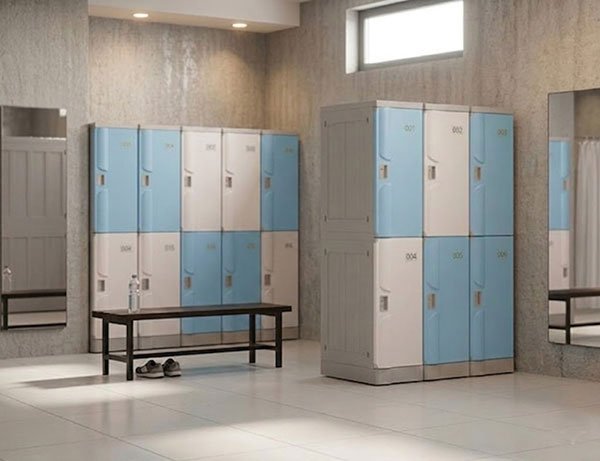
What Infection Control Auditors Look For in Locker Rooms
Infection control auditors assess changing rooms against standards set by bodies such as the Joint Commission International (JCI), the CDC, and national health authorities. The audit checklist for staff changing facilities typically includes:
- Presence of rust or corrosion on any surface ??lockers, benches, fixtures
- Cleanability of surfaces ??are they smooth, non-porous, and free of cracks?
- Separation of clean uniforms from used or potentially contaminated scrubs
- Evidence of moisture damage, mold, or mildew
- Adequate ventilation and air exchange rates
- Hand hygiene facilities near the locker area
Lockers hit the first three items on the list. Rusty lockers trigger findings on surfaces, cleanability, and clean/dirty separation ??all at once.
5 Common Locker Findings That Trigger Corrective Action
- Rust on locker doors and frames. This is the most common finding and the hardest to argue against. Rust is visibly unhygienic. It provides a rough surface where bacteria can accumulate, and it suggests the facility is not being maintained to an acceptable standard.
- Peeling paint as a contamination risk. In areas where staff handle sterile supplies or enter operating rooms, peeling paint is classified as a physical contamination risk. Paint chips can adhere to scrubs and be carried into sensitive areas.
- No physical separation between clean and used uniforms. A single-compartment locker means staff put clean scrubs into the same space that held used, potentially contaminated scrubs eight hours earlier. Auditors increasingly expect dual-zone lockers with separate compartments.
- Visible mold or mildew on locker surfaces. In warm, humid climates, steel lockers in poorly ventilated change rooms develop surface mold on exterior and interior panels. Mold is an immediate red flag in any healthcare audit.
- Lockers that cannot be properly sanitized. If a locker surface has rust pits, peeling coating, or deep scratches, standard disinfectant wipes cannot effectively clean it. The auditor will note that the surface is “not compatible with the facility’s cleaning protocol.”
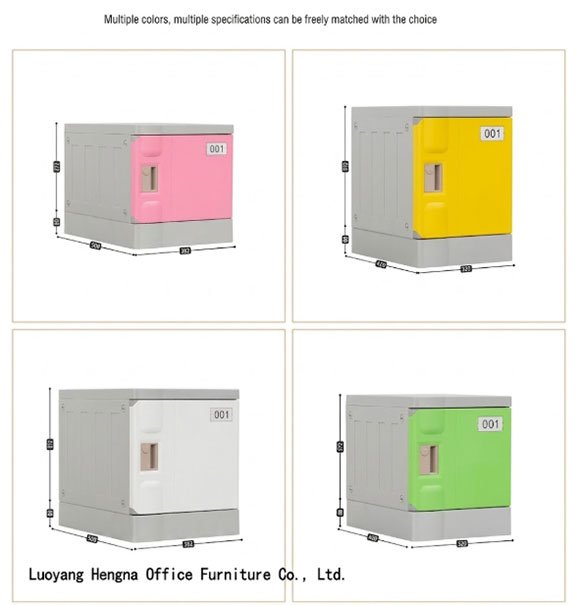
Why Steel Lockers Are Harder to Keep Audit-Ready
Steel lockers in hospital changing rooms face a perfect storm: high humidity from showers, daily exposure to disinfectant chemicals, and heavy use across multiple shifts. The powder coating breaks down faster in this environment than anywhere else. Once rust starts, the only permanent fix is replacement ??rust treatment and repainting is a temporary measure that typically lasts 12 to 18 months before the rust returns. That is not long enough to survive the audit cycle.
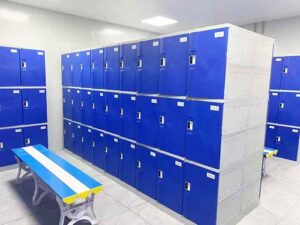
How ABS Lockers Address Each Common Finding
| Audit Finding | Steel Locker Issue | ABS Locker Solution |
|---|---|---|
| Rust on surfaces | Inevitable in humid conditions | Cannot rust ??no metal in the material |
| Peeling paint / contamination risk | Coating delaminates over time | No coating ??material is solid color throughout |
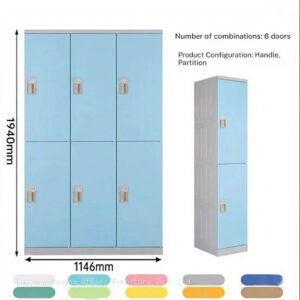
| Clean/dirty separation | Single compartment only | Dual-zone design with separate clean and dirty compartments |
| Mold and mildew | Porous rust surfaces trap moisture | Non-porous, smooth surface with built-in ventilation |
| Cannot sanitize effectively | Rough, pitted surfaces trap residue | Smooth, wipe-clean surface compatible with hospital-grade disinfectants |
Experience From the Field: Achieving Zero Locker Findings
A mid-size private hospital in Southeast Asia replaced their steel staff lockers with ABS in 2023, after their infection control committee documented rust on 40 percent of existing lockers during the previous quarterly inspection. They selected ABS lockers with antimicrobial material certification and the dual-zone clean/dirty compartment design.
Two years later, in the 2025 annual infection control audit, the locker rooms received zero findings ??for the first time in five years. Staff compliance with the clean/dirty uniform protocol improved noticeably. The physical separation of compartments made the protocol intuitive rather than something staff had to remember.
This pattern ??rust findings leading to ABS replacement, followed by clean audits ??has been repeated across multiple healthcare facilities in humid and tropical climates. The common thread: the rust problem cannot be managed out of steel lockers. It has to be eliminated at the material level.
Preparing Your Locker Room for the Next Audit
If your next audit is within 6 months and locker replacement is not feasible in that window:
- Document the current condition with dated photographs ??show you have identified the problem and have a replacement plan.
- Increase cleaning frequency to daily, using hospital-grade disinfectant wipes on all locker surfaces.
- Install temporary dehumidifiers in locker rooms to reduce ambient humidity.
- Get a quote for ABS locker replacement now ??having a plan demonstrates proactive management to auditors.
Auditors do not expect perfection. They expect that you have identified risks and are managing them. The worst outcome is a finding that surprises you.
What a Healthcare Facility Learned After Three Audit Cycles
A mid-size hospital in a humid coastal region tracked locker-room audit findings over three consecutive annual infection control cycles. In the first cycle, steel lockers in the staff changing room received three findings: rust on door edges, peeling paint as a contamination risk, and surfaces classified as “not compatible with the facility’s cleaning protocol.” Corrective action: spot treatment and repainting of affected doors plus a commitment to increase cleaning frequency.
In the second audit cycle, 12 months later, the same locker room received two findings – the rust had returned on roughly half of the previously treated doors, and new rust had appeared on doors that were not treated in the first round. The committee’s observation: “Corrective action is not durable.” The hospital budgeted for full locker replacement.
In the third cycle, after replacing all steel lockers with antimicrobial ABS units featuring dual-zone clean/dirty compartments, the locker room received zero findings. Staff compliance with the clean/dirty uniform protocol improved because the physical compartment separation made the correct behavior the default behavior. The hospital’s infection control committee documented the material change as a permanent corrective action – not a recurring maintenance item.
Frequently Asked Questions
Do ABS lockers meet hospital infection control standards?
Yes. ABS lockers with antimicrobial certification meet the surface cleanability requirements of JCI, CDC, and national health authority standards. The non-porous surface is compatible with quaternary ammonium, hydrogen peroxide, and sodium hypochlorite disinfectants at healthcare concentrations.
Can RFID or access control be integrated with ABS lockers?
Yes. ABS lockers support RFID, HID, and MIFARE access control systems. The lock housing is integrated into the door during manufacturing. On-site pairing support is available for orders of 50 doors or more.
What documentation is provided for audit purposes?
Every hospital order includes a material compliance statement, antimicrobial certification (where applicable), surface porosity test data, and a cleaning protocol document compatible with JCI and national health authority audit requirements.