ABS Plastic Locker Customization Guide: Color, Size, Door, and Accessory Options | Hengna
Door Colors: More Than Just Choosing Blue or Gray
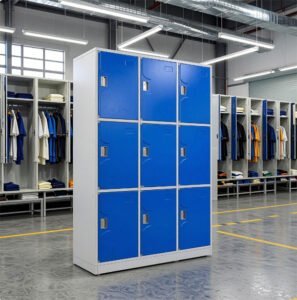
ABS lockers come in a wide range of colors because the pigment is mixed into the plastic during manufacturing rather than painted on top. That means the color runs all the way through the material. Scratches do not expose a different-colored layer underneath, and the color does not chip off like paint on metal lockers.
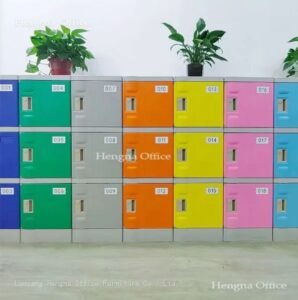
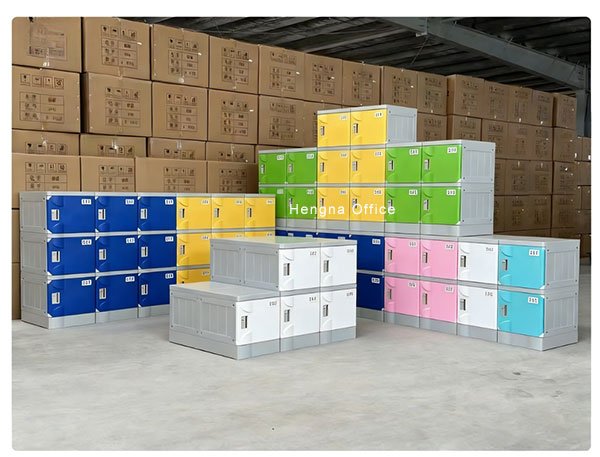
Common standard colors include marine blue, light gray, beige, white, forest green, and bright yellow. Many manufacturers also offer custom color matching for large orders, which lets schools match their team colors or hotels match their brand palette. When specifying colors, ask for a physical color chip rather than relying on a screen image. The same Pantone code can look different under fluorescent office lighting versus natural daylight in a poolside changing room.
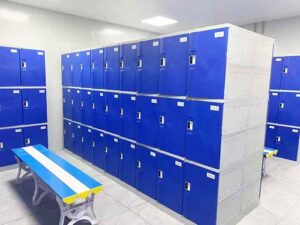
For multi-color installations, ABS makes zone-based color coding practical and durable. A sports complex might use blue lockers in the pool area, green in the gym, and white in the spa. Color coding helps users navigate large facilities and lets staff identify which zone a locker belongs to at a glance during cleaning rounds.
Size Options: Standard Configurations and Custom Dimensions
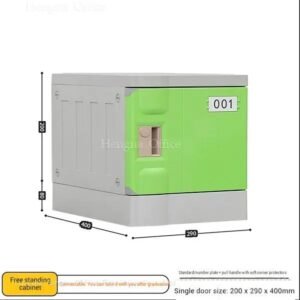
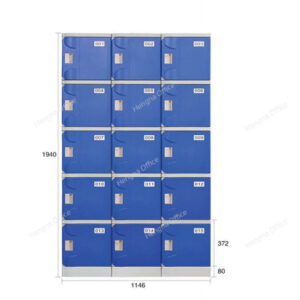
Most ABS locker suppliers build around standard door modules: single-tier full-height at approximately 300mm wide by 1,800mm tall, two-tier half-height at 300mm by 900mm, and three-tier box lockers at 300mm by 600mm or 380mm by 600mm. These match the dimensions people expect from school and gym lockers worldwide, and they fit standard corridor widths.
Beyond standard sizes, many manufacturers can adjust depth, width, and height within the limits of their tooling. A deeper locker at 500mm instead of 450mm fits bulkier items like sports gear bags. A wider locker at 380mm instead of 300mm gives users more shoulder room. Taller configurations work for facilities with high ceilings where the extra height is not wasted. Shorter box lockers are popular in elementary schools where full-height doors are too heavy for younger children.
When planning sizes, think about what people will actually store. A gym locker needs to hold a backpack, shoes, and a change of clothes. A factory changing room locker needs to hold a work jacket, steel-toe boots, and a helmet. Start with the largest item your users will store and size up from there.
Door Configurations: Hinges, Handles, and Openings
Door hinge direction is a configurable option that affects daily usability. Left-hinge and right-hinge doors can be mixed within a single locker bank. Alternating hinge directions prevents adjacent doors from blocking each other when two people open lockers side by side. For end columns against a wall, order the hinge on the side away from the wall so the door opens into the room, not into a corner.
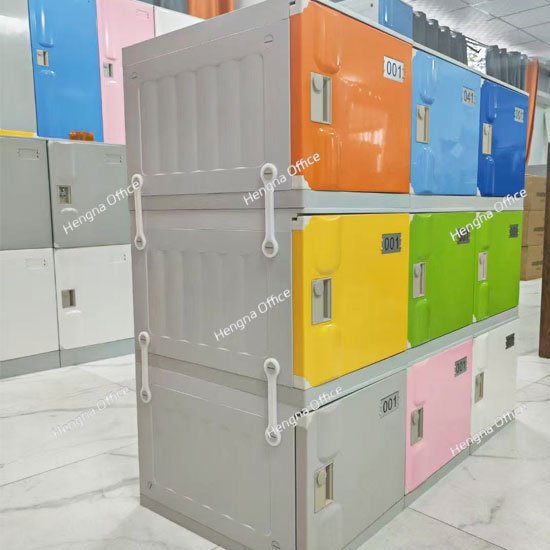
Handle styles range from recessed finger pulls to protruding D-handles. Recessed pulls sit flush with the door surface, which prevents clothing from snagging in narrow corridors. D-handles are easier to grip with wet hands, which matters in pool changing rooms. Some manufacturers offer soft-touch rubberized handles as an upgrade for gym and spa environments.
Name card holders are a small but high-utility option. A clear plastic sleeve on the door face holds a paper name card or number tag. Without them, users stick tape or labels directly on the door, which looks messy and leaves residue during cleaning.
Ventilation: Solid Doors, Louvered Vents, or Perforated Panels
Ventilation is one of the most practical customization decisions for ABS lockers. Solid doors provide full visual privacy and keep dust out but trap humidity inside. Louvered vents built into the door let air circulate while blocking direct line of sight into the locker. Perforated side panels add cross-ventilation between adjacent lockers in a bank.
For humid environments like pool changing rooms, vented doors combined with a raised base and mechanical room exhaust is the right combination. For clean environments like hospital staff changing rooms, solid doors with smooth surfaces that can be wiped down without snagging are preferred. For schools, a mix of solid doors with small top louvers balances privacy with enough airflow to prevent the locker room smell that students and parents complain about.
Interior Accessories: Shelves, Hooks, and Compartments
The inside of an ABS locker does not have to be an empty box. Interior shelving splits the vertical space into storage zones: shoes on the bottom shelf, folded clothes in the middle, and a bag on top. Coat hooks come in single, double, and triple configurations and can be mounted on the back wall or side walls. Some manufacturers offer a built-in small-items tray at the top for phones, wallets, and keys.
For gym and pool lockers, a separate wet-storage compartment with a drip tray keeps damp items from soaking everything else in the locker. For school lockers, a built-in pencil tray and a magnetic whiteboard section on the inside of the door turn a storage box into a mini workspace.
Interior accessories should be made of the same ABS material or stainless steel. Avoid interior hardware made of materials that can rust, because the first time someone stores a wet item overnight, any non-stainless metal inside the locker will start showing rust spots within weeks.
Locking Systems: From Keyed to Keyless
The lock is the most interacted-with part of any locker, and ABS lockers support a wide range of locking options. Traditional keyed cam locks are simple and reliable but create key management overhead. Built-in combination dials eliminate keys but require users to remember a code. Coin-return or token-return mechanisms work for short-term use in public pools and gyms where users come and go throughout the day.
Electronic locks are becoming the standard for new installations. RFID card or wristband locks let users tap to open, which is faster than dialing a combination with wet fingers and more sanitary than a shared keypad. PIN-code locks with an admin master code let staff open any locker for cleaning or lost-item retrieval without cutting locks. Battery-powered electronic locks typically run for one to two years on standard AA or lithium batteries before needing replacement.
Base Frame Upgrades
The base frame is easy to overlook during specification but hard to fix after installation. A standard galvanized steel base with fixed-height legs works for indoor spaces with level floors. For wet areas, upgrade to a stainless steel base to avoid the galvanized coating eventually wearing through at bolt points. For uneven floors, adjustable leveling feet with a 20-millimeter adjustment range let installers compensate for floor slope without shimming. For facilities that hose down floors for cleaning, a raised base of 150 millimeters or more keeps the locker bottom clear of water and makes it easy to mop underneath.
Branding and Custom Graphics
For schools, sports clubs, and corporate gyms, a logo on the locker door turns a generic storage unit into part of the facility identity. Options range from screen-printed logos in a single color to full-color UV-printed graphics that cover the entire door face. Screen printing is cost-effective for simple logos on large orders. UV printing handles gradients, photographs, and fine detail but costs more per door. Engraved metal plaques with room for a name or number add a premium feel for executive locker rooms and private club installations.