Can 6-Door Steel Lockers Hold Sports Gear and Ventilate Properly in Gyms?
Gym operators face a practical question when choosing storage: Can 6-door steel lockers handle sports gear while keeping ventilation adequate? The short answer is yes — but the details matter, especially when your gym has humid areas near pools or saunas.
Why Ventilation Matters in Gym Lockers
Gym lockers develop odor because bacteria multiply on sweat-soaked fabrics stored in enclosed spaces. Studies show poorly ventilated lockers can harbor bacteria levels 10-100 times higher than well-ventilated ones. The moisture from wet workout clothes, towels, and shoes creates a breeding ground, and the problem gets worse in humid environments.
Steel lockers have specific ventilation challenges:
- Condensation: Steel surfaces cool rapidly, causing moisture from warm air to condense inside the compartment
- Rust at vent points: Ventilation holes in steel create weak spots where corrosion starts
- Limited openings: Most steel lockers keep vent slots small to maintain structural integrity
Gym operators with steel lockers near pools, saunas, or showers often report rust appearing within 18-24 months, even with standard ventilation slots. The combination of humidity and temperature fluctuations accelerates corrosion at exactly the points where airflow is supposed to help. In coastal areas with salt air, the timeline can be even shorter — some facilities see surface rust within 12 months.
What 6-Door Steel Lockers Can Hold
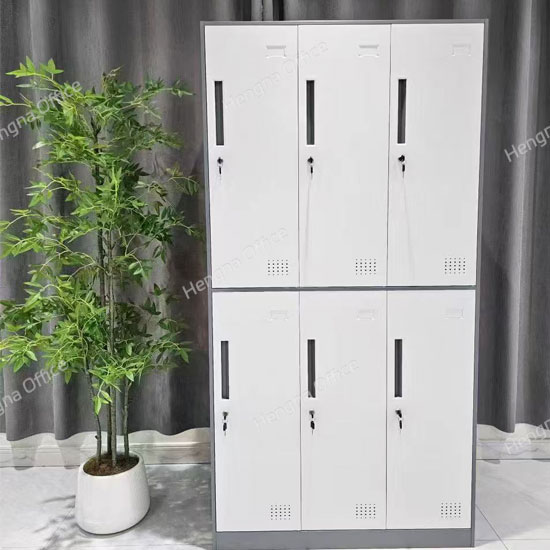
A standard 6-door locker compartment (roughly 300mm W × 450mm D × 300mm H) fits a reasonable amount of gym gear:
- 1-2 pairs of athletic shoes
- 2-3 sets of workout clothes
- 1 gym bag or backpack
- 1 towel and small personal items (wallet, phone, keys)
For sport-specific storage, the compartments work well with the right interior setup:
| Sport | Key Items | Storage Tip |
|---|---|---|
| Football | Helmet, cleats, shoulder pads | Top shelf for helmet, bottom for shoes |
| Basketball | Shoes, knee pads, ball | Hooks for shoes, shelf for ball |
| Swimming | Goggles, cap, towel, flip-flops | Hooks for wet items, shelf for dry gear |
| Tennis | Racket, shoes, water bottle | Vertical racket holder, shelf for shoes |
| Yoga | Mat, blocks, strap | Shelf for rolled mat, hooks for accessories |
Customization options include adjustable shelves, interior hooks, and vented shoe compartments at the bottom. Some gym operators also add built-in charging ports for phones (requires electrical work) or mirrors on door interiors for members who want to check form between sets. These additions make a real difference in how members use the space and how satisfied they are with the storage experience.
Ventilation Solutions That Actually Work
To make steel lockers perform well in a gym setting, focus on airflow design and maintenance:
Built-in features to look for when buying:
- Door louvers (3-5 horizontal slots per door for passive airflow)
- Side vents for cross-ventilation between adjacent lockers
- Top/bottom vents for vertical airflow through the compartment
After-market additions for problem areas:
- USB-rechargeable fans mounted inside compartments
- Passive dehumidifiers (silica gel packs or moisture-absorbing products)
- UV-C sanitizers to kill bacteria and reduce odor (requires power source)
Maintenance best practices:
1. Install lockers away from direct shower spray and pool splash zones
2. Elevate the base 80-100mm to prevent floor moisture from entering
3. Wipe down interiors weekly with disinfectant
4. Encourage members to remove wet items promptly — post signage in locker rooms
5. Ensure the gym’s HVAC system provides adequate air exchange in the locker area
A 24-hour fitness center in Florida solved persistent odor complaints by combining three fixes: adding exhaust fans to the locker room, elevating lockers 100mm off the floor, and installing UV-C sanitizers inside each compartment. Complaints dropped 85% within three months, and the steel lockers showed no new rust after a year.
Steel vs. ABS Plastic: When to Consider the Alternative
Many gyms now compare steel lockers against ABS plastic options before purchasing. The differences matter more than most facility managers expect, especially when calculating total cost of ownership over 5-10 years:
Choose steel lockers when:
- Budget is the primary concern (steel is 20-30% cheaper upfront)
- Lockers are in dry, climate-controlled areas away from water
- Maximum security is needed (thicker steel resists forced entry)
- Aesthetic preference favors a traditional metal look
Choose ABS plastic lockers when:
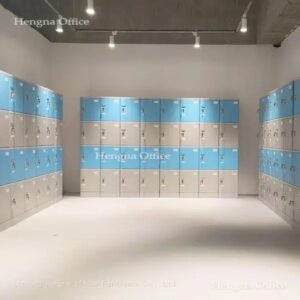
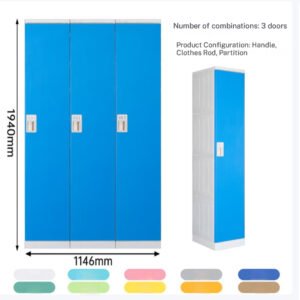
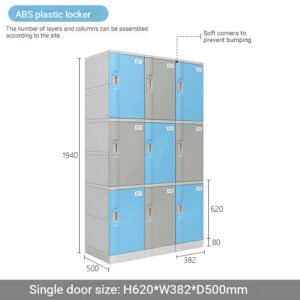
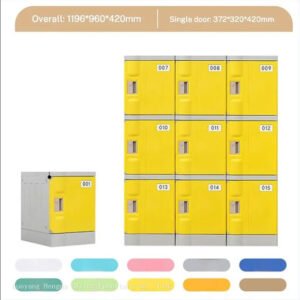
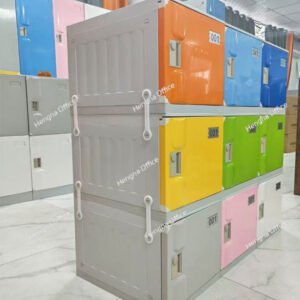
- High-humidity environment (pools, saunas, outdoor areas, tropical climates)
- Long-term maintenance costs matter more than upfront price
- Hygiene and odor control are top priorities
- Weight reduction is important (easier to install and reconfigure)
ABS plastic doesn’t condense moisture like metal, won’t rust at vent points, and resists mold on its non-porous surface. A gym chain in Texas replaced steel lockers with ABS in their pool area and tracked results over two years: zero corrosion on ABS units while 40% of the original steel lockers had developed visible rust. Maintenance costs dropped 60% in that area.
The trade-off is upfront cost and security. Steel lockers with thicker gauge are harder to breach, and they cost less to purchase. For a dry weight room or cardio area, steel remains the practical choice. Some gyms use a hybrid approach: steel in dry zones and ABS in wet areas, which optimizes both budget and long-term maintenance costs.
Buying Checklist for Gym Facility Managers
Before purchasing 6-door lockers, verify these specifications:
Essential specs:
- Gauge thickness: Minimum 20-gauge steel for durability in high-use environments
- Ventilation: At least 3 louver slots per door for passive airflow
- Lock type: Padlock hasps (members bring their own), built-in combination locks, or RFID card locks — match to your security needs and member preferences
- Compartment size: Verify it fits standard gym bags and equipment
- Finish: Powder-coated to resist scratches and rust
- Warranty: Minimum 3-year coverage on structure and finish
Optional upgrades worth considering:
- Sloped tops to prevent items being stored on top (safety and cleanliness)
- Number plates for easy member identification
- Color coding for different areas or membership tiers
- Interior hooks for hanging workout clothes
- Vented shoe compartments at the bottom

Installation tips:
- Anchor lockers to the floor to prevent tipping
- Allow 150mm between locker banks for air circulation
- Ensure adequate lighting in the locker room (improves security and cleanliness)
Common Mistakes to Avoid
Gym operators often make a few predictable errors when purchasing lockers:
- Buying on price alone: The cheapest steel lockers use thinner gauge (24-gauge or higher) that dents easily and won’t last in a high-traffic gym
- Ignoring ventilation in the layout: Installing lockers in corners with no airflow creates moisture traps, even with vented doors
- Skipping floor anchoring: Unsecured lockers can tip when multiple doors are open, creating a safety hazard
- Forgetting about cleaning access: Lockers installed flush against walls make it hard to clean behind them, leading to mold buildup
Avoiding these mistakes saves money and headaches in the first year of operation.
Want to see how this sits in the rest of the line? Every model we build sets them out in one place, ordered by how many people each unit serves.
Bottom Line
6-door steel lockers with locks handle gym storage well in dry, climate-controlled environments with proper ventilation. They hold a reasonable amount of gear, offer security through built-in locks, and last years with basic maintenance. The key is matching the locker material and ventilation design to your gym’s specific conditions — a locker that works perfectly in a dry weight room may fail quickly near a pool.
For high-humidity areas near pools or saunas, ABS plastic lockers eliminate rust and condensation problems entirely. The higher upfront cost pays back through lower maintenance, fewer replacements, and better hygiene. Some gyms use a hybrid approach: steel in dry zones and ABS in wet areas, optimizing both budget and long-term maintenance costs.
Invest in proper ventilation, maintain a regular cleaning schedule, and choose the right material for each area. With the right setup, your storage investment will serve members reliably for 10+ years with minimal issues.