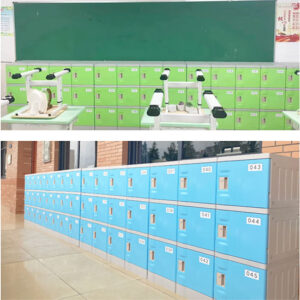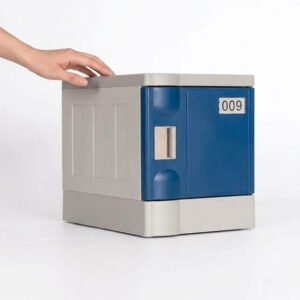
Cold Storage Lockers in ABS — Why the Cabinet Stays Tough When Steel Turns Brittle
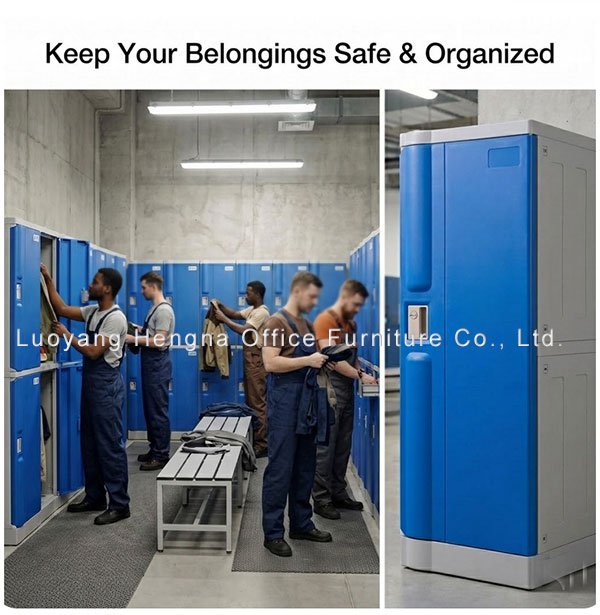
Cold storage facilities punish lockers twice. The changing and anteroom zones run a constant condensation cycle — warm humid air meets cold surfaces every time a door opens — and the deep-freeze chambers beyond them hold temperatures that change how steel behaves. A cabinet that survives a wet changing room can still fail a cold store, just from a different direction. This guide covers what cold actually does to locker materials, why ABS holds its toughness where painted steel turns brittle, and the one limit worth asking about in writing. Specs reflect Hengna’s 2026 ABS locker range.
The Two Zones That Attack a Locker
Cold storage sites have two very different locker environments, and they fail cabinets in different ways.
The changing and anteroom zones sit between the office side and the freezer doors. Every time a chamber door swings, warm wet air rolls out and condenses on everything cold in its path — including every locker surface in the corridor. Staff in freezer suits sweat through breaks and hang damp gear inside their compartments. The room never dries properly before the next cycle starts.
Beyond the doors, deep-freeze chambers run at -18 to -25 °C for frozen goods, and chilled zones hold just above zero. Loading docks swing between freezer air and summer dock air daily — a freeze-thaw rhythm that adds ice, melt water and thermal shock to whatever stands in the way. Nobody mounts lockers inside the chambers themselves, but the staff areas around them are cold enough to matter.
Why Painted Steel Struggles in the Cold
Steel fails cold stores in two distinct ways, and the second one surprises buyers who only planned for rust.
The first is familiar from every wet room: condensation finds each coating break. Hinges, bolt holes, folded edges and feet are where paint cracks, and in a cold corridor the moisture sits longer because nothing dries fast at four degrees. Rust streaks down steel doors in a cold store look identical to the ones in a swimming pool changing room.
The second is metallurgy. As temperature drops, carbon steel loses toughness — the property that lets a dented door absorb a blow and keep its shape. In a deep-cold corridor, an impact that would leave a cosmetic dent at room temperature can crack a cold steel panel or snap a cold hinge. Add the human factor: bare steel handles and door edges at deep-freeze temperatures are uncomfortable, sometimes unsafe, to touch with bare hands.
Where ABS Stands in the Cold
ABS handles both attacks better than coated steel. On the moisture side, the case is the same as any wet room: no coating to chip, no bare edges to corrode, color through the panel, surfaces that wipe dry in one pass. Condensation sits on ABS and evaporates without leaving a mark.
On the toughness side, ABS keeps its impact resistance at low temperatures far better than steel does — where a cold steel panel cracks on impact, cold ABS panels tend to dent and recover. Most ABS grades hold useful impact performance down to around -20 °C; the exact figure depends on the grade, so ask the supplier to state the material’s rated service temperature in writing with the quote. That one line on paper settles the whole discussion.
The practical details carry over from every other Hengna range note: mortise-and-tenon snap assembly with no fasteners to freeze and loosen, an 80 mm molded base that lifts door edges out of melt water at the dock, and molded design life over 20 years in a facility where shutdown windows for refits are short and expensive.
The Honest Limit, Stated Plainly
No locker belongs inside a freezer chamber, and ABS is no exception — plastics stiffen as temperatures fall further, and a chamber at -25 °C sits at the edge of what most grades are rated for. Lockers belong in the changing block, the anteroom corridor and the dock-side gear areas, where the cold is real but moderated. If a project genuinely requires storage inside a deep-freeze envelope, that is a specialist equipment question — say so to the supplier and get the answer in writing rather than assuming the changing-room spec stretches. A supplier who states limits plainly is easier to trust on everything else.
Specs That Matter on a Cold-Store Order
Four choices separate a smooth project from a re-order:
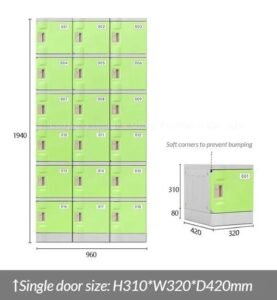
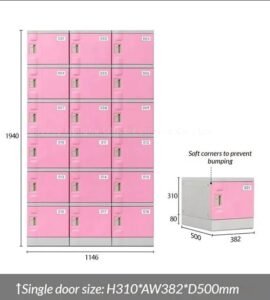
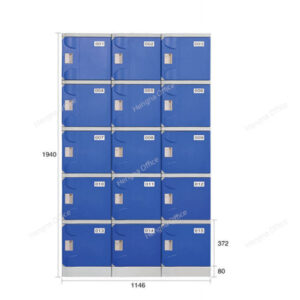
- Module and height — 930 × 382 × 500 mm two-tier banks for boot-and-bag changing, full-height single-door columns for freezer suits that hang long. Heights run to 2100 mm on the standard module family.
- Locks by temperature zone — key locks for the coldest corridors where electronics and condensation argue; combination locks in the milder changing block, where four-digit resets run the shift rotation without a key desk.
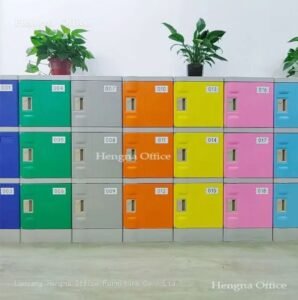
- Color for visibility — cold corridors run dim. Bright doors from the 8 standard colors read clearly under low light, and color-zoning by department cuts wrong-locker mix-ups at shift change.
- Assembly speed — tool-free snap construction matters double here: refit windows in a running cold store are measured in hours, and no-drilling installs keep food-safety audits calm.
Bench choice belongs in the same order. Wooden slat benches — the standard in most staff changing rooms — swell and split under daily washdowns in a cold-store changing block. Matching ABS benches from 900 to 2000 mm use the same molded chemistry as the lockers, survive the same cleaning routine, and keep the room on one visual line.
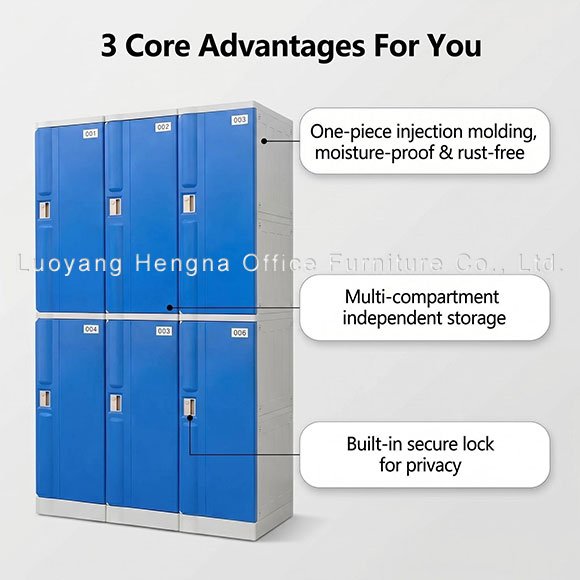
One-piece injection molding is the whole argument in a single door: no seams for condensation to work into, no coating to chip at hinge height, and the same panel chemistry from the changing block to the anteroom.
Ordering From Hengna
Luoyang Hengna Office Furniture Co., Ltd. supplies the ABS locker range on a manufacturer-direct basis for cold chain, food processing and logistics projects, with OEM support covering silk-screen logos, custom packaging and custom manuals. Orders ship knock-down in foam and corner-guard packing — flat cartons ride freight elevators and narrow cold-store corridors, and banks assemble tool-free inside a shift. Warranty is one year. Send the site temperature zones and door count, and the quote comes back within 24 hours.
Want to see how this sits in the rest of the line? The model list covers heights, widths and compartment sizes for the whole set.
Common Questions
Can the lockers go inside the freezer chamber?
They are specified for changing blocks, anterooms and dock areas, not inside deep-freeze envelopes. If a project needs in-chamber storage, raise it separately and get the material’s rated service temperature in writing before deciding.
How cold is too cold for the lock electronics?
Key locks carry no electronics and suit the coldest corridors. Combination and RFID locks belong in the milder changing block — and whatever the mix, ask for the lock’s operating temperature range as part of the quote.
What is the minimum order quantity?
Sample banks for a single changing block are accepted; container quantities bring the better unit pricing. Share the zone plan and door count for an exact figure.
Can our logo and department colors go on the doors?
Yes. Silk-screen printing, custom colors on volume orders, custom packaging and custom manuals are standard OEM options.
FOB or CIF — how do you quote?
Both. Send the destination port and preferred terms; the quote with warranty, lock options and current lead time returns within 24 hours.