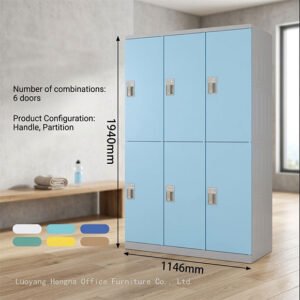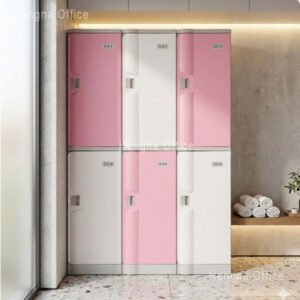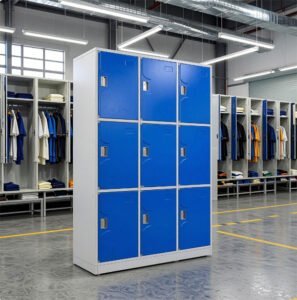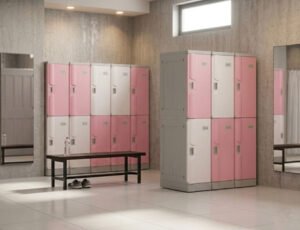
How Long Do Plastic Lockers Last vs Steel? A 10-Year Facility Cost Comparison
When a facility manager sits down to compare locker options, the first number they see is the unit price. Steel lockers: one number. ABS plastic lockers: a slightly lower number. The plastic option looks a bit cheaper. The decision seems easy. But that unit price is the smallest number in the equation. The real cost of a locker is what happens in years 2, 5, 8, and 10 ??long after the purchase order is filed and forgotten. This comparison breaks down the full 10-year cost of steel versus ABS plastic lockers across every major cost category.
Upfront Cost: The Comparison Most Buyers Stop At
A 100-door installation ??typical for a small school, a single gym, or a factory changing room:
| Upfront Cost Factor | Powder-Coated Steel | ABS Plastic |
|---|---|---|
| Unit price per door (mid-range) | Baseline | Slightly lower ??comparable or less |
| Shipping weight | Heavier ??higher freight cost | Lighter ??lower freight cost |
| Installation method | Pre-assembled or semi-assembled | KD flat-pack ??faster handling |
| Installation labor | Longer ??heavy units, more workers | Shorter ??lighter panels, snap-together |
| Overall installed cost | Baseline | Lower ??saves on freight and labor |
ABS lockers start at a lower installed cost ??primarily due to lighter shipping weight and faster assembly. But as noted, this is the small number. The big difference comes over time.
Maintenance Cost: Where Steel Lockers Consume the Operations Budget
Steel lockers in any environment with humidity require ongoing maintenance year after year:
| Annual Maintenance Activity (100 Doors) | Steel Lockers | ABS Lockers |
|---|---|---|
| Rust treatment and touch-up paint | Required ??labor plus materials, quarterly | Not needed |
| Door replacement due to corrosion | Average 3 to 5 doors per year | Zero |
| Hinge and latch repairs | Regular ??corrosion causes failure | Minimal ??no corrosion-driven failures |
| Graffiti removal and repainting | Multi-step: sand, prime, paint, cure | Single step: wipe off |
| Staff labor (locker-specific, annual) | Significant ??3 to 5 hours per week | Minimal ??mostly routine cleaning |
| Annual maintenance intensity | High ??increases each year | Low ??stable over time |
Steel lockers require roughly 10 times more maintenance labor and materials each year compared to ABS. Over 10 years, the cumulative maintenance gap is the single largest cost difference between the two materials.
Replacement Cycle: The Hidden Timeline
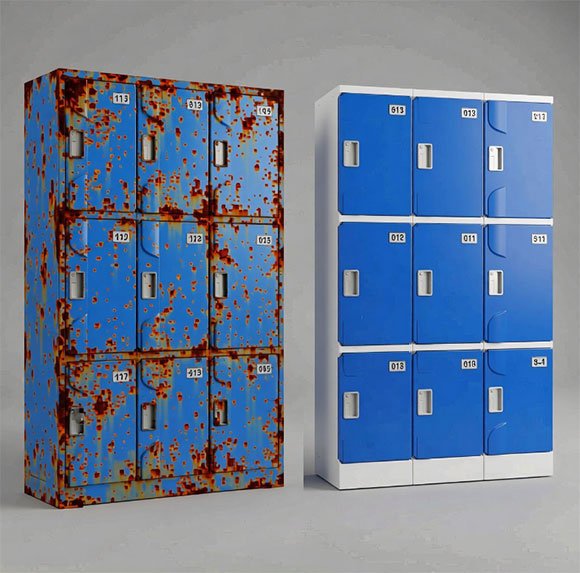
Steel lockers do not last the life of the building. In wet or humid environments, they typically need full replacement at year 10 to 12. In dry, climate-controlled indoor environments, they might stretch to 15 to 18 years before cumulative rust and damage make replacement cheaper than continuous repair.
ABS lockers have a different aging profile: they do not rust, so there is no corrosion-driven replacement cycle. The limiting factor is physical damage from extreme abuse ??which also damages steel lockers ??and UV degradation in outdoor applications, addressed by specifying UV-stabilized material. In typical indoor use, ABS lockers have a service life of 20 years or more with basic cleaning.
The 10-Year Picture: ABS vs Steel Maintenance Profile
| 10-Year Activity (100 Doors) | Steel Lockers | ABS Lockers |
|---|---|---|
| Full repaint cycles | 2 (years 5 and 10) ??entire bank offline | Zero |
| Doors replaced (corrosion-driven) | 30 to 50 over 10 years | Zero |
| Rust treatment events | 30+ (quarterly after year 2) | Zero |
| Staff labor hours (locker maintenance) | ~1,500 to 2,000 hours | ~200 to 300 hours (cleaning only) |
| Operational disruption | Multiple full shutdowns for repainting | None ??always in service |
| End-of-life at year 10 | Likely approaching full replacement | Still in service ??10+ years remaining |
Over 10 years, the total cost of owning and maintaining steel lockers is typically 3 to 4 times higher than ABS for the same 100-door installation. The gap widens further in humid, coastal, or chemically active environments. In a pool changing room ??the worst-case scenario ??steel lockers can cost 5 times more than ABS over a decade.
Insurance and Compliance: The Hidden Costs
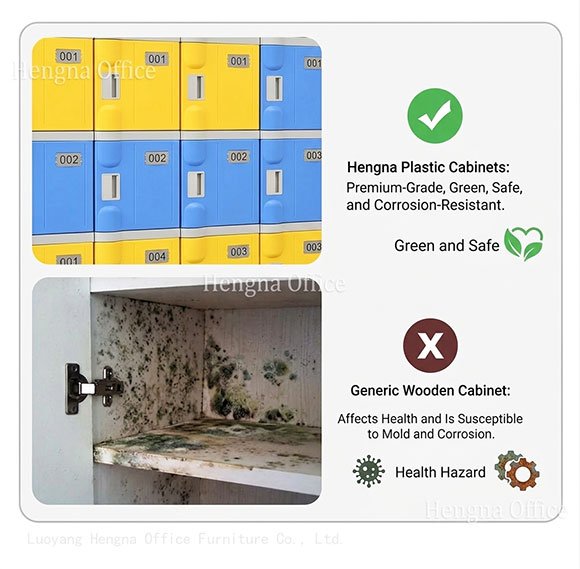
Two soft costs worth noting. First: some facility insurers classify rusted steel lockers as a liability risk ??sharp edges from corroded metal can cause cuts, and collapsed locker doors can cause injury. Second: facilities subject to health inspections ??hospitals, food plants, daycare centers ??can receive citations for rust and peeling paint. The cost of a citation is not just any fine ??it is the operational disruption of responding, documenting corrective actions, and scheduling follow-up inspections.
ABS lockers eliminate both risks at the material level. There is no rust to create sharp edges, no paint to peel, and no corrosion to flag in an inspection.
When Steel Still Makes Sense ??and When It Does Not
Steel lockers remain a reasonable choice in one specific scenario: a climate-controlled, low-humidity indoor environment ??an air-conditioned office building in a dry climate ??where the lockers will never be exposed to moisture, chemicals, or significant temperature swings. In that environment, steel lockers can serve for 15 to 20 years with minimal maintenance.
In every other scenario ??any environment with humidity, water, chemicals, salt air, or heavy daily use ??the 10-year numbers favor ABS plastic lockers by a margin that facility managers can no longer afford to ignore.
What the Numbers Look Like in Practice: A Facility That Tracked Everything
A facility management team in a humid Southeast Asian region tracked every locker-related maintenance transaction across two buildings over 6 years: Building A with 120 powder-coated steel lockers in a staff changing room, Building B with 90 ABS lockers in an identical-use changing room. Both rooms had showers, both had the same cleaning schedule, and both were used by approximately the same number of staff per shift.
By year 4, the steel locker bank had consumed roughly 3 times the maintenance labor of the ABS bank. By year 6, the gap had widened further – the steel lockers had undergone one full repaint and were approaching a second, while the ABS bank had required only routine cleaning. The facility’s own tracking spreadsheet, initially created for budget forecasting, became the internal business case for standardizing on ABS across all future projects. The most telling number: maintenance staff spent approximately 90 hours per year on the steel locker bank versus 15 hours on the ABS bank, for roughly the same door count.
Frequently Asked Questions
Are ABS lockers as strong as steel lockers?
ABS has high impact resistance ??it rebounds from impacts that would permanently dent steel. For security, ABS locker doors use the same lock mechanisms as steel lockers. The material is engineered for the same daily-use loads as steel lockers in commercial environments.
Do ABS lockers fade or yellow over time?
Standard ABS lockers in indoor applications show no visible color change over a 10-year service life. For outdoor or sun-exposed installations, UV-stabilized ABS should be specified ??this formulation includes UV inhibitors that prevent yellowing and surface degradation.
What warranty comes with ABS lockers?
Standard ABS lockers from Luoyang Hengna carry a 10-year warranty against manufacturing defects and material failure. This includes rust ??with the obvious caveat that ABS cannot rust. The warranty covers door delamination, hinge failure, and structural integrity under normal commercial use.